

Top Aftercare Tips for Whitening Sensitivity
Whitening sensitivity usually eases within 24–48 hours. I recommend gentle care and following your product’s directions - not pushing through pain.
Here are my eight aftercare tips:
- Choose room-temperature or lukewarm food and drinks.
- Limit acids, and follow your product’s stain-prevention advice.
- Rinse with plain water after meals.
- Brush gently with soft bristles; wait about 30 minutes after acidic food or drinks.
- Use toothpaste for sensitive teeth as directed.
- Pause whitening if discomfort increases.
- Follow your provider’s check-in and treatment schedule.
- Contact a dentist for severe, one-tooth, persistent or worsening pain, or marked gum irritation.
Comfort comes before another session. <u>Don’t extend treatment time or change gel strength yourself.</u> If product directions conflict with your provider’s advice, ask before continuing. Keep a record of the product, treatment time and symptoms to share at follow-up.
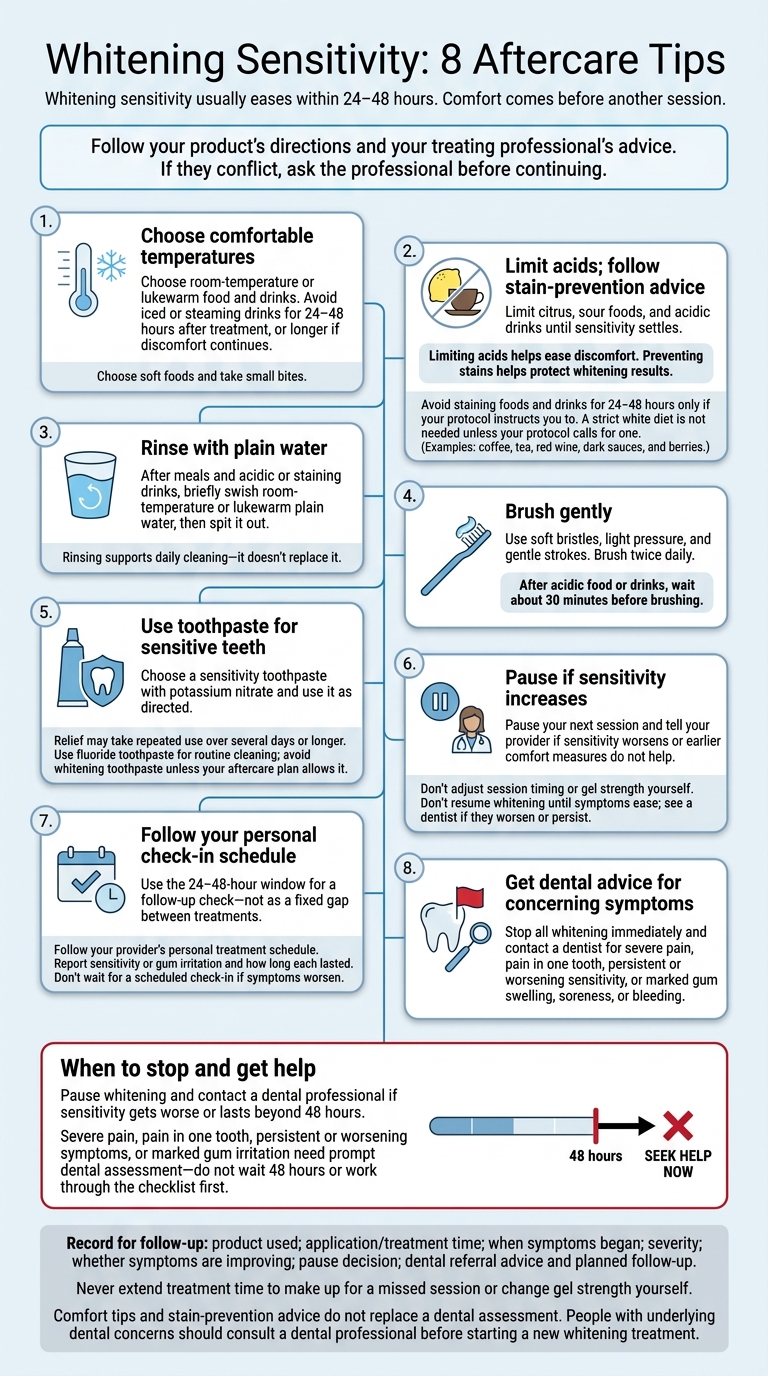
Whitening Sensitivity: 8 Aftercare Tips
Follow Your Product’s Aftercare Instructions
Follow the exact aftercare directions for your whitening product and your treating professional’s advice. If they conflict, ask the professional before continuing.
Comfort tips help reduce sensitivity triggers, while stain-prevention advice helps protect your whitening results. Neither replaces a dental assessment.
Refer clients with underlying dental concerns to a dental professional before they start any new whitening treatment.
Once the product instructions are clear, start with the easiest trigger to control: temperature.
sbb-itb-accb75b
1. Choose Comfortable Food and Drink Temperatures
Client action
Choose room-temperature or lukewarm water rather than iced or steaming drinks. Stick to soft foods and take small bites to reduce irritation and strain as your teeth settle after treatment.
Purpose and timeframe
Hot and cold foods and drinks can trigger sensitivity after whitening. Choose room-temperature or lukewarm options for 24–48 hours after treatment, or longer if discomfort continues.
When to pause or seek dental advice
Pause whitening and contact a dental professional if sensitivity gets worse or lasts beyond 48 hours.
If temperature isn’t the only trigger, the next step is to limit acids and other irritants.
2. Limit Acids and Follow Stain-Prevention Advice
Client action and purpose
Limit citrus, sour foods, and acidic drinks. For coffee, tea, red wine, dark sauces, and berries, follow the whitening product’s stain-prevention instructions.
Limiting acids helps ease discomfort. Preventing stains helps protect whitening results. You don’t need a strict white diet unless your protocol calls for one.
Timeframe
Limit acids until sensitivity settles. Avoid staining foods and drinks for 24–48 hours only if your protocol instructs you to. If discomfort continues, rinse with plain water after meals.
When to pause or seek dental advice
Pause whitening and refer the client to a dental professional if sensitivity gets worse or lasts longer than expected.
3. Rinse With Plain Water After Meals
Client action
If you can’t avoid a meal or drink, rinse soon afterwards to clear away residue. Use plain water at room temperature or lukewarm, swish briefly, then spit it out. Do this after meals and acidic or staining drinks.
Purpose
Water washes away acids and pigments that can worsen sensitivity and make stains harder to control.
Timeframe
Rinse after each meal and after acidic or staining drinks throughout the aftercare period.
Next, brush gently. Rinsing supports daily cleaning - it doesn’t replace it.
4. Brush Gently With Soft Bristles
After rinsing, move on to brushing.
Client action
Use a soft-bristled toothbrush with light pressure and gentle strokes. Skip the hard scrubbing - pressing harder doesn’t mean a better clean.
Purpose
Gentle brushing helps reduce irritation.
Timeframe
Brush twice daily. After acidic foods or drinks, wait about 30 minutes before brushing.
When to pause or seek dental advice
Pause whitening and seek dental advice promptly if discomfort gets worse or continues after gentle brushing.
5. Choose Toothpaste for Sensitive Teeth
If your teeth still feel sore after gentle brushing, switch to a toothpaste for sensitive teeth.
Client action
Choose a sensitivity toothpaste with potassium nitrate and use it as directed. Follow the product label and your dentist’s instructions for how much to use and how often.
Purpose
Relief may take repeated use over several days or longer. Use fluoride toothpaste for routine cleaning, and avoid whitening toothpaste unless your aftercare plan allows it.
When to pause or seek dental advice
Pause whitening and seek dental advice if sensitivity gets worse or does not ease, then move to the next step.
6. Pause Whitening if Sensitivity Increases
Client action
If sensitivity gets worse or the earlier aftercare steps or remineralization gel don’t ease the discomfort, pause your next session and tell your provider. Don’t adjust the session timing or gel strength yourself.
Purpose
Before treatment resumes, record when symptoms began, how severe they are, and whether they’re improving. Your provider can use these details to decide whether it’s safe to continue.
Timeframe
For home-use whitening, follow the label or your provider’s instructions. For professional treatment, let your provider decide whether to shorten, pause, or reschedule the session.
When to pause or seek dental advice
Don’t resume whitening until symptoms ease. See a dentist if they worsen or persist.
7. Follow Your Personal Follow-Up Schedule
Client action
If your provider schedules a follow-up, use it to check whether sensitivity is easing. Respond to their call or text, and report any sensitivity or gum irritation, including how long each lasted.
Purpose
The check-in helps your provider confirm that you tolerated the session well. Check with your provider about recovery and readiness for your next session rather than guessing.
Timeframe
Use the 24–48-hour window for a follow-up check, not as a fixed gap between treatments. Follow your personal treatment schedule.
When to pause or seek dental advice
If pain worsens, sharp pain develops, or gum redness does not settle within 48 hours, pause whitening and contact your provider promptly. Don’t wait for the scheduled check-in.
8. Get Dental Advice for Concerning Symptoms
Client action
Stop all whitening immediately and contact a dentist if you notice any of these symptoms:
- Pain in one tooth or severe pain
- Sensitivity that persists or gets worse
- Marked gum swelling, soreness, or bleeding
Purpose
If the earlier comfort tips don’t ease the pain, a dental issue may be the cause. These symptoms need a dentist’s assessment. Pain in just one tooth deserves particular attention because it may point to an underlying dental problem.
Timeframe
Seek prompt dental assessment.
Use the checklist below to confirm when to stop whitening and seek dental care.
Aftercare and Dental Referral Checklist
Use this checklist to document aftercare and referral decisions.
- Pause whitening if sensitivity increases. Record the decision.
- Record the whitening gel used, application time, and any symptoms during or after treatment.
- Don’t extend exposure to make up for a missed session. Longer sessions can worsen sensitivity.
- Refer for a dental assessment if symptoms are severe, localized, persistent, or worsening. Record the referral advice and planned follow-up.
FAQs
How can I tell sensitivity from a dental problem?
If a client’s discomfort lasts longer than typical whitening sensitivity, or they’re worried about cavities or gum disease, advise them to see a qualified dentist for a diagnosis.
Cosmetic teeth whitening is not a dental procedure. Your role is to provide whitening treatments and aftercare advice - not to diagnose or treat dental conditions. Don’t claim that whitening services can treat dental problems or restore enamel.
Can I use sensitivity toothpaste before whitening?
Yes. Brushing regularly with sensitivity toothpaste before your whitening appointment can help you stay comfortable. Under Canadian regulations, cosmetic whitening products cannot legally claim to reduce sensitivity or treat dental conditions.
Good brushing habits also help prepare your teeth for treatment. Choosing a non-peroxide gel, such as those offered by Smile360 Teeth Whitening Canada, can further reduce irritation and discomfort during your session.
How do I know when to resume whitening?
Follow the manufacturer’s instructions for application times, session frequency, and treatment cycles. Use these guidelines to decide when a client can safely return for a follow-up session, balancing results with their comfort and safety. Check your supplier’s documentation for the recommended intervals for the specific professional-grade whitening gels you use.