

How to Build a Sustainable Dental Supply Chain
Building a more efficient dental supply chain can reduce costs, cut emissions, and improve operations. Key steps include:
- Evaluate your current supply chain: Map suppliers, processes, and products to identify inefficiencies and high-emission areas like disposables and energy-intensive equipment.
- Audit sustainability practices: Request supplier emissions data, track energy and water usage, and assess waste, including single-use plastics and hazardous materials.
- Track key metrics: Monitor inventory turnover, supplier certifications, energy consumption, and waste reduction to measure progress.
- Choose eco-conscious suppliers: Look for local Canadian suppliers to reduce shipping emissions and ensure compliance with Health Canada standards.
- Switch to reusable or biodegradable products: Opt for items like nitrile gloves, bamboo toothbrushes, and peroxide-free whitening gels.
- Improve inventory management: Use methods like FIFO to minimize waste and avoid overstocking.
- Optimize logistics and operations: Consolidate shipments, upgrade to energy-efficient equipment, and adopt smart power management practices.
- Monitor and refine efforts: Regularly review KPIs, engage suppliers in improving practices, and train staff on waste reduction and procurement processes.
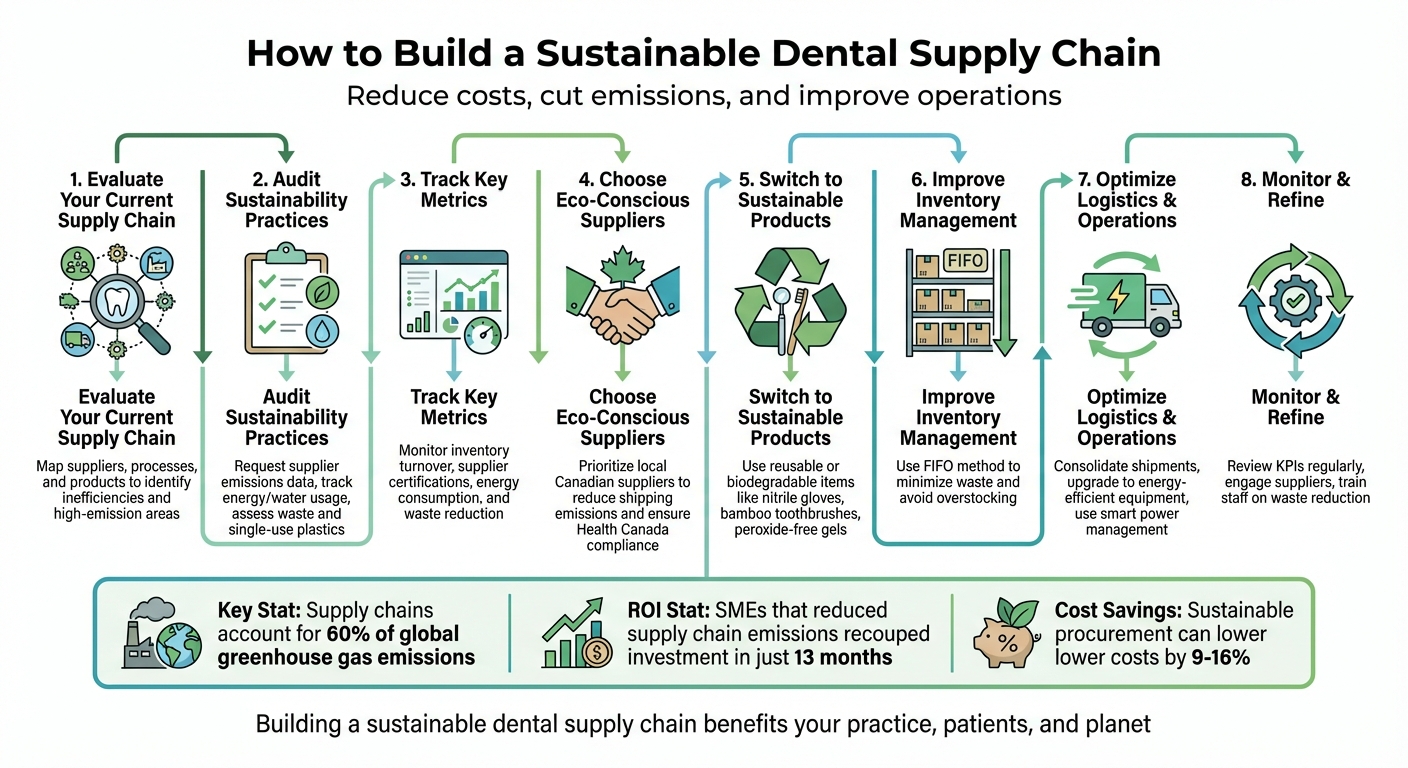
8 Steps to Build a Sustainable Dental Supply Chain
The Road to a Sustainable Supply Chain
sbb-itb-accb75b
Assess Your Current Supply Chain for Sustainability Issues
The first step in addressing sustainability within your supply chain is to evaluate its environmental impact. This deep dive helps identify which suppliers, processes, and products are contributing most to your carbon footprint - and where you’re spending the most money. Marianne Pemberton, Senior Corporate Sustainability Advisor at BDC, explains:
"It doesn't matter how you do it - whether it's with pen and paper or a spreadsheet - but the first step is to create a list of all the areas where your business uses energy".
Start by mapping every stage of your supply chain, from sourcing raw materials to the disposal of your products. Focus on the costliest items in your budget - they often present the biggest opportunities for reducing greenhouse gas emissions. For dental practices, this might mean examining high-use disposables like gloves and sterilization pouches or energy-intensive equipment such as autoclaves, compressors, and HVAC systems.
Conduct a Sustainability Audit
Begin by categorizing all your suppliers based on their activities - whether they’re involved in raw material extraction, heavy processing, or logistics. Then, request greenhouse gas emissions data, including fuel consumption for both stationary operations and transportation. Don’t stop at first-tier suppliers; extend your inquiries to second- and third-tier suppliers as well.
Next, evaluate your own operational resource use. This includes tracking electricity usage from items like sterilization equipment, lighting, and HVAC systems, as well as monitoring water consumption during clinical procedures and cleaning. Waste is another critical area to assess - track single-use plastics, sharps, and hazardous chemicals. For dental practices, ensuring your amalgam separator is functioning properly is essential to prevent mercury contamination.
Consider the end-of-life stage for your products. Can items be returned, repaired, or recycled? Monica Da Ponte, Principal Consultant at Shift & Build, highlights the importance of aligning procurement with broader sustainability goals:
"Sustainable procurement isn't just about the products. It's also about whether the seller's actions and decisions are in keeping with its policies or commitments on sustainability".
Look for suppliers with certifications like B Corp, ISO 14001, or EPEAT to verify their environmental efforts.
Finally, calculate the Total Cost of Ownership (TCO), which includes not just the purchase price but also maintenance, energy use, and disposal costs. This approach can both cut emissions and reduce long-term costs. In fact, sustainable procurement practices have been shown to lower overall procurement costs by 9% to 16%, and SMEs that reduced their supply chain carbon emissions typically recouped their investment in just 13 months.
Use the insights from your audit to set specific sustainability goals and benchmarks.
Identify Key Metrics to Track
With your audit complete, it’s time to define measurable metrics to guide your sustainability efforts. Supply chains are responsible for about 60% of global greenhouse gas emissions, and a company’s supply chain emissions are, on average, 11.4 times higher than its direct operational emissions. By tracking the right indicators, you can focus on areas with the most potential for improvement.
Key metrics to monitor include inventory turnover rates, order frequency, expired product levels, energy consumption (kWh), water usage per procedure, freight costs, shipment frequency, and waste volumes. Additionally, measure the percentage of suppliers with recognized sustainability certifications to ensure they align with your values.
Reducing delivery frequency by consolidating shipments can cut both emissions and transportation costs. When assessing new suppliers, consider assigning 10% to 30% of your bid evaluation score to sustainability criteria, ensuring environmental factors play a meaningful role in decision-making. It’s worth noting that sustainable products accounted for 41% of consumer packaged goods growth from 2013 to 2024, with consumers willing to pay an average premium of 9.7% for responsibly sourced goods.
Select Eco-Friendly Suppliers and Materials
Once you've identified areas for improvement in your supply chain, the next step is to choose suppliers and products that align with your environmental goals. Use your audit findings to focus on suppliers whose practices match your green objectives. This means going beyond the cost and evaluating how suppliers manufacture, package, and transport their products. As the Australian Dental Association points out:
"for a practice to be sustainable, there needs to be engagement with suppliers which encourages the supplier to become more environmentally sustainable in the manufacture, packaging, travel, recycling, and reuse of their products".
The next step is to verify supplier documentation to ensure their products meet safety and sustainability standards. Start by requesting Material Safety Data Sheets (MSDS) from potential suppliers to evaluate the chemical makeup and environmental impact of products like whitening gels and disinfectants. Give preference to suppliers offering items made with safer, plant-based, or mineral-based ingredients. Opting for Canadian suppliers can also help reduce the carbon emissions associated with long-distance shipping.
Source Biodegradable and Non-Toxic Products
Switching to biodegradable and non-toxic supplies is an effective way to reduce your environmental footprint. For example, nitrile gloves are often a better alternative to vinyl gloves. Similarly, biodegradable headrest covers and paper-based dental bibs are excellent options. For teeth whitening services, consider non-peroxide professional treatment kits that are gentler and more eco-friendly than chemical bleaches.
Smile360 Teeth Whitening Canada provides Health Canada–approved vegan whitening gels made with plant- and mineral-based ingredients like Sodium Bicarbonate and Glycerin. These gels deliver results of 2–6 shades brighter per treatment without relying on peroxide or harsh chemicals. They also offer eco-conscious products like bamboo toothbrushes (starting at $8.00 CAD), silicone cheek retractors ($4.95 CAD), silicone whitening trays ($4.95 CAD), and poly-coated paper cups ($4.95 CAD per 100-pack). These biodegradable and reusable items help reduce single-use plastic waste while maintaining professional standards.
When evaluating biodegradable products, check for ASTM D6400 or ASTM D6868 certifications, which confirm the product can safely decompose without leaving synthetic residues. Additionally, request recyclable or paper-based packaging and consider bulk orders to further cut down on waste.
Verify Certifications and Standards
After selecting eco-friendly materials, it’s essential to confirm their credibility through recognized certifications. These certifications provide independent assurance that suppliers meet environmental and safety standards. For Canadian dental practices, Health Canada compliance is a must for all medical devices and health products. Beyond this, third-party certifications can validate sustainability claims.
For instance, ECOLOGO (UL) is a Canadian certification that verifies a product’s environmental impact across its life cycle. Green Seal ensures products are biodegradable and free of harmful substances like phthalates and heavy metals. For paper-based items such as dental bibs and headrest covers, look for certifications from the Forest Stewardship Council (FSC), Sustainable Forestry Initiative (SFI), or Programme for the Endorsement of Forest Certification (PEFC) to confirm they are sourced from responsibly managed forests.
These certifications make it easier to gauge a product’s ecological impact.
| Certification/Standard | Application in Dental Practice | Benefit |
|---|---|---|
| ECOLOGO | Cleaning and sanitation products | Verifies environmental impact across the product life cycle |
| Green Seal | Biodegradable supplies/cleaners | Ensures no harmful substances like heavy metals or phthalates |
| FSC / SFI | Paper cups, bibs, headrest covers | Confirms sustainable forest management |
| Health Canada | Medical devices and gels | Ensures regulatory safety and quality standards |
| B Corp | Supplier business practices | Validates social and environmental accountability |
You can also use databases like UL SPOT or the NSF Certified Products Registry to check if specific products or manufacturers have earned sustainability credentials. By sourcing from Canadian suppliers like Smile360, you not only access Health Canada–approved products but also support local environmental efforts by cutting down on shipping emissions.
Reduce Waste and Improve Inventory Management
After selecting sustainable suppliers, the next step in creating a greener supply chain is focusing on waste reduction and smarter inventory practices. Dental supplies typically make up 5–6% of a clinic's total revenue, so even small adjustments can lead to noticeable improvements.
Use Reusable Alternatives
Switching from single-use plastics to reusable stainless steel or glass items is a simple way to cut down on waste. For instance, replace disposable plastic suction tips with reusable stainless steel ones, or opt for glass irrigation syringes instead of plastic. Similarly, stainless steel prophy heads not only reduce waste but also save money over time compared to disposable plastic versions.
Another way to reduce waste is by choosing the right package sizes for materials like adhesives, sealants, and restorative products. Selecting quantities that match procedural needs helps prevent chemical waste and keeps your supply costs in line with industry standards.
While reusable alternatives tackle waste, effective inventory management ensures you’re not overstocked or letting products expire unnecessarily.
Improve Inventory Management
Good inventory management prevents overstocking and reduces the risk of expired materials. One effective strategy is the "First-In, First-Out" (FIFO) method, which prioritizes the use of older stock before it expires. Additionally, calculate weekly usage for key items like gloves and anaesthetic to set par levels and reorder points, avoiding emergency orders and surplus inventory.
In early 2026, an Ontario clinic achieved a 20% reduction in supply waste within just 90 days by dedicating 30 minutes each week to inventory reviews, implementing clear standard operating procedures (SOPs), and maintaining strict tracking systems. As Frontier Dental aptly puts it:
"Inventory discipline is easier when it's part of daily culture, not a once-a-year panic project".
Instead of shutting down operations for an annual inventory count, try weekly cycle counts, checking 10–20% of stock at a time, so the entire inventory is reviewed quarterly. To prevent confusion and duplicate stock, enforce a "one-bin-one-SKU" rule. Standardizing operatory layouts also helps clinicians quickly locate materials, reducing unnecessary package openings. For added efficiency, use colour-coded categories - such as blue for infection control supplies and green for restorative items - to streamline restocking and minimize errors.
Streamline Logistics and Operations to Lower Environmental Impact
After improving inventory practices, the next step is refining your logistics and daily operations to further shrink your environmental footprint. Supply chains are often a major contributor to global CO2 emissions, with over 50% of these emissions concentrated in the supply chains of just eight major industries. For dental practices, focusing on transportation and energy use can make a meaningful difference. Fine-tuning these areas complements earlier efforts to make your supply chain more sustainable.
Consolidate Vendor Shipments
Reducing the number of delivery trips is a straightforward way to cut carbon emissions. By consolidating orders from multiple suppliers into fewer, larger shipments, you can minimize transportation emissions and streamline administrative tasks like processing invoices and managing deliveries. Instead of receiving several small packages each week, aim to work with one or two key suppliers.
This approach not only lowers emissions but can also save 10–20% on costs by reducing duplication and improving pricing negotiations. Start by auditing your vendor relationships: list all suppliers, their monthly costs, renewal dates, and frequency of use to identify overlaps. Group vendors by categories like "Clinical Supplies" or "Patient Communication" to see where consolidation is possible.
Choosing suppliers with free shipping thresholds can also help. For instance, Smile360 Teeth Whitening Canada offers free shipping across the country on orders over $199 CAD, with no minimum order size for wholesale pricing. Meeting these thresholds reduces packaging waste and delivery frequency. Additionally, predictive inventory systems can help avoid last-minute, high-emission emergency shipments.
Switch to Energy-Efficient Equipment
Optimizing energy use in daily operations is another effective way to reduce your clinic's environmental impact. Switching to LED lighting, which uses up to 75% less energy than traditional bulbs, is an easy upgrade. Adding dimmer systems allows you to adjust light levels based on natural lighting, while motion detectors in restrooms and break areas ensure lights are only active when needed. Programmable thermostats can help manage heating and cooling efficiently, especially outside office hours.
Replacing outdated equipment with ENERGY STAR-rated appliances is another smart move. Transitioning from wet vacuums to dry vacuum systems eliminates water use entirely, and digital radiography reduces both chemical waste and the energy needed for physical storage. To cut standby power consumption, use smart power strips and ensure electronics are turned off at the end of the day. These changes not only lower your clinic's carbon footprint but can also reduce costs by 9–16% through better efficiency and resource management.
Monitor and Improve Sustainability Metrics Over Time
Once you've fine-tuned your logistics and inventory, the next step is to keep a close eye on your sustainability performance and make ongoing adjustments. Building a sustainable supply chain isn’t something you can set and forget - it requires consistent monitoring and tweaking. Without tracking, it’s tough to know if you’re actually cutting waste, saving money, or reducing emissions. Typically, sustainability metrics fall into three categories: Environmental (like energy use, waste levels, and climate impact), Social (such as staff welfare and diversity), and Governance (policy compliance). By focusing on key performance indicators (KPIs) that align with your practice’s goals, you can link sustainability efforts directly to operational efficiency and supplier relationships, paving the way for steady improvement.
Track Key Performance Indicators (KPIs)
To start, figure out which metrics matter most for your dental practice. For instance, practice overhead should ideally stay at 63% or less of your total income; if it’s higher, it’s time to review and cut expenses. On the sustainability front, you might track metrics like inventory usage rates, waste reduction percentages, or the cost of supplies as a percentage of revenue. Assign clear ownership for each metric - operations can handle utilization rates, while billing might oversee collections - and schedule regular reviews (weekly, monthly, and quarterly).
Using dental practice management software can make this process smoother by automating data collection and generating real-time reports. This helps avoid over-ordering and reduces waste from expired products. If you’re aiming to measure supply chain emissions, consider tracking Scope 3 emissions, which cover indirect emissions from suppliers’ operations and transportation. While these can be trickier to verify than your direct energy use, asking suppliers for details on their fuel consumption, shipping methods, and electricity use can provide valuable insights.
Interestingly, small and medium-sized enterprises (SMEs) that successfully reduced supply chain carbon emissions recouped their investment in just 13 months on average. Conducting an annual review of vendor fees and dental supply costs can also help you identify opportunities to renegotiate contracts for better pricing or more sustainable options. These efforts create a solid foundation for ongoing improvements in sustainability across your practice.
Train Staff on Sustainability Practices
Your sustainability goals won’t stick without the support of your entire team. Documenting all procurement and inventory processes ensures everyone is on the same page, boosts efficiency, and helps avoid stock shortages.
Hold monthly audits to check stock levels, flag items nearing expiry, and predict future needs. During these audits, use the FEFO (First-Expired, First-Out) method by moving items close to expiry to the front of storage areas. This simple step can significantly cut waste. You might also consider enrolling your team in targeted training programs, like the three-hour MOOC offered by the FDI World Dental Federation, to deepen their understanding of sustainability practices.
Engage directly with suppliers about their environmental efforts and collaborate to set realistic reduction goals. As Professor Claudia Rebolledo from HEC Montréal puts it:
"If you can't find suppliers with the standards you're looking for, you can always help them improve their environmental performance".
Use Smile360 Teeth Whitening Canada for Sustainable Sourcing
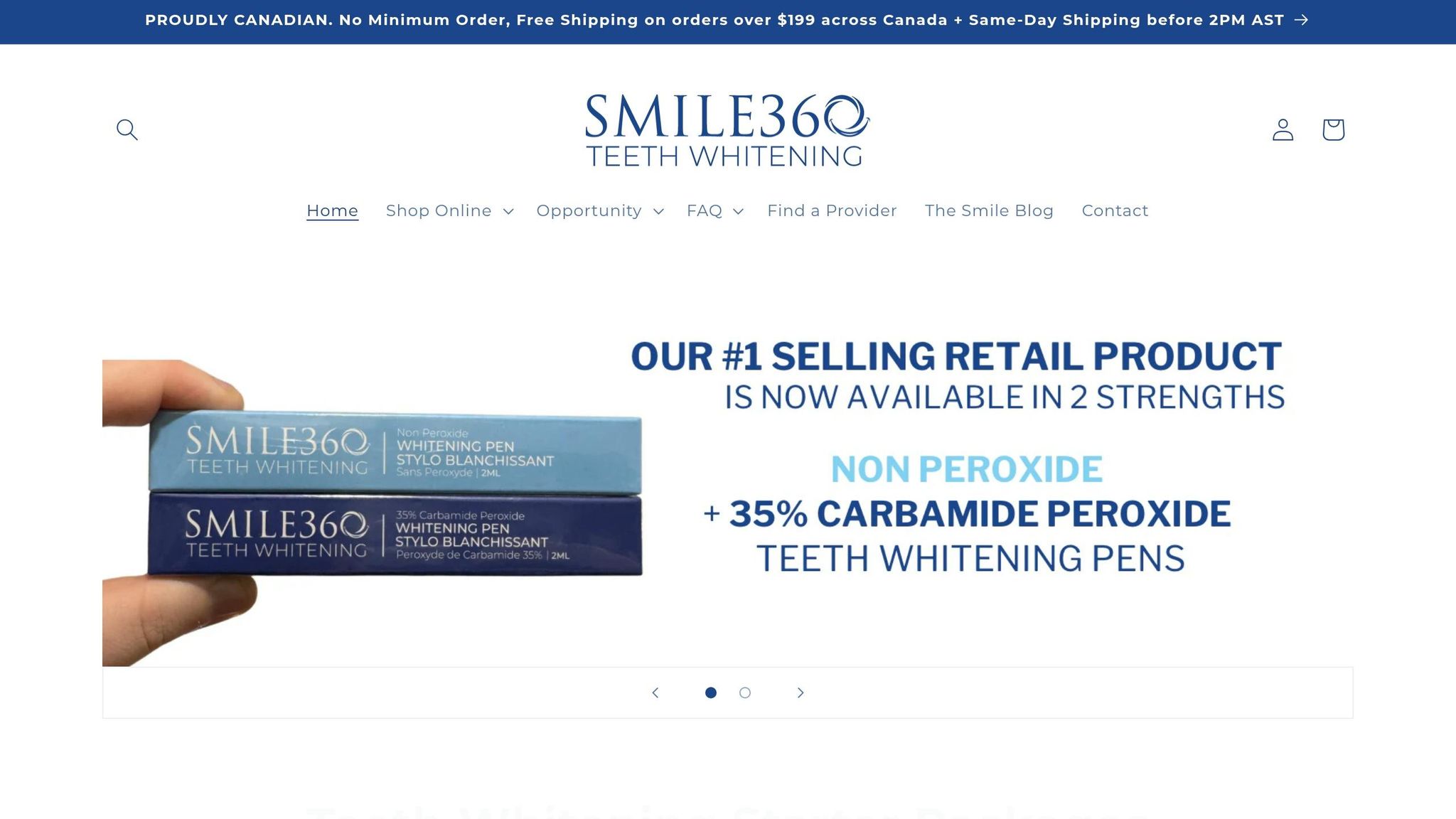
Partnering with suppliers that align with your sustainability goals simplifies the process. Smile360 Teeth Whitening Canada, a Canadian brand, specializes in teeth whitening products, equipment, and essential consumables like disposable gloves and disinfecting wipes. Their wholesale model offers flexibility, letting you order only what you need without minimum order requirements.
When sourcing products, look for biodegradable options - like nitrile gloves or items with recyclable packaging - to help meet your waste reduction targets. Choosing local suppliers, such as Smile360 Teeth Whitening Canada, can also cut down on shipping-related emissions while ensuring compliance with Health Canada standards.
As Professor Claudia Rebolledo from HEC Montréal notes:
"greener companies will not always charge higher fees. Sometimes companies can take a different approach and work more efficiently and then save money elsewhere to offset some of their more expensive sustainable choices".
Conclusion
Creating a greener dental supply chain is within reach. Start by reviewing your current operations to pinpoint waste and inefficiencies. Opt for suppliers offering biodegradable or reusable products, and consider working with Canadian-based suppliers to lower shipping emissions and meet Health Canada standards.
These steps can bring real savings and streamline operations. Sustainable choices often reduce procurement costs over time and cut down on waste. Better inventory management helps avoid surplus stock and minimizes expired products.
Take Smile360 Teeth Whitening Canada as an example. This small Canadian business shows how a locally focused, adaptable supply chain can promote sustainability. By offering wholesale options with no steep minimums, they make it easier for other small businesses to buy locally. Purchasing in Canadian dollars avoids foreign transaction fees and currency conversion hassles while also curbing emissions from long-haul shipping.
FAQs
What are the best KPIs to start tracking in a small dental clinic?
For small dental clinics, keeping track of specific metrics is crucial to maintaining an efficient and reliable supply chain. Here are some key areas to focus on:
- Inventory Metrics: Monitoring stock levels, reorder points, and expiration dates ensures that essential supplies are always available and nothing goes to waste due to spoilage or overstocking.
- Supply Costs and Waste Reduction: Keeping an eye on supply expenses and identifying ways to minimize waste can help clinics manage their budgets more effectively.
- Compliance Metrics: Ensuring adherence to safety standards and regulations is not just about meeting legal requirements - it’s about prioritizing patient safety and maintaining a trustworthy operation.
By paying attention to these KPIs, small dental clinics can streamline their supply chain processes while keeping costs under control and ensuring high standards of care.
How can I vet a supplier’s sustainability claims in Canada?
Mapping your supply chain is a crucial first step in understanding where your suppliers operate and identifying potential risks, whether they relate to environmental concerns or social issues. Make sure to clearly outline your sustainability goals to your suppliers and request relevant documentation, like green certifications, to validate their practices.
Take it a step further by working closely with suppliers - offer training and support to help them meet your standards. To keep everything on track, use tools like supplier scorecards to regularly evaluate their performance. This ensures their claims hold up and align with the expectations you've set.
What swaps reduce the most waste without increasing costs?
Proper staff training, maintaining ideal storage conditions, keeping a close eye on expiration dates, and implementing FIFO (First In, First Out) inventory management are some of the best ways to cut waste without increasing costs. These approaches not only help reduce product waste and avoid losses from expired items but also keep operations cost-efficient while lessening the strain on the environment.