

How Diet Affects Teeth Whitening Longevity
What you eat and drink can shorten or stretch out your whitening results. In most cases, teeth whitening can last about 1–3 years, but dark drinks, stain-heavy foods, acid, and sugar can make that fade sooner.
Here’s the short version:
- The first 48–72 hours matter most because enamel can stain more easily right after whitening.
- Coffee, black tea, red wine, cola, berries, curry, soy sauce, and tomato sauce are common stain sources.
- Citrus, soda, sports drinks, and energy drinks can wear down enamel, which makes new stains stick faster.
- Sugary snacks and refined carbs can lead to more plaque, and plaque holds onto colour.
- Water, milk, cheese, apples, celery, and carrots are lower-risk picks that can help keep teeth looking brighter.
- Wait at least 30 minutes before brushing after acidic foods or drinks.
If I wanted the simplest plan possible, I’d do this: eat light-coloured foods and use silver foil bags for storage for 24–48 hours, rinse with water after meals, and use a straw for dark drinks. That won’t stop all restaining, but it can help whitening last longer.
Quick Comparison
| Choice | Effect on whitening | Main reason |
|---|---|---|
| Water | Helps | Washes away pigments and acids |
| Milk, cheese, plain yogurt | Helps | Supports enamel and lowers acid in the mouth |
| Apples, celery, carrots | Helps | Help clear surface debris and boost saliva |
| Coffee, black tea | Hurts | Tannins stain enamel |
| Red wine, dark soda | Hurts | Pigment plus acid |
| Berries, curry, soy sauce, tomato sauce | Hurts | Strong colour sticks to teeth |
| Citrus juice, sports drinks, energy drinks | Hurts | Acid softens enamel |
| Sugary snacks | Hurts | More plaque means more stain build-up |
So the main point is simple: the less contact your teeth have with stain-heavy and acidic foods, the longer your whitening results tend to last.
sbb-itb-accb75b
Foods and Drinks That Make Whitening Fade Faster
The first 48 hours matter most. During that window, what you eat and drink can make a big difference. Some foods and drinks stain enamel on contact. Others soften enamel first, which makes stains stick more easily. Either way, whitening can fade sooner.
Dark Drinks and High-Pigment Foods to Avoid
A simple rule helps here: if it would stain a white cotton T-shirt, it can probably stain freshly whitened teeth.
Coffee and black tea are common troublemakers. They contain tannins, which stick to enamel and can leave yellow or brown discolouration over time. Red wine, cola, and sports drinks can do much the same.
High-pigment foods can also leave their mark. That includes:
- beets
- blueberries
- blackberries
- soy sauce
- curry
- tomato-based sauces
These foods contain chromogens, which are pigments that cling to tooth enamel. And it’s not just dark foods you need to watch. Some lighter-coloured foods can still cause problems if they’re acidic or high in sugar.
Acidic and Sugary Foods That Speed Up Restaining
Acidic foods and drinks can soften enamel. When that happens, stains can set in faster, and the yellow dentin under the enamel can show through more clearly. Citrus fruits, vinegar-based dressings, sodas, sports drinks, and energy drinks all fit into this group.
Sugar causes a different problem. Sugary snacks, flavoured water, and refined carbs can lead to more plaque, and plaque holds onto stains more easily. So even if you skip coffee, red wine, or charcoal whitening products, teeth can still start to look dull or discoloured sooner when plaque builds up.
One more thing: don’t brush right after acidic foods or drinks. Wait at least 30 minutes to give enamel time to reharden. The next step is picking foods and drinks that are less likely to stain.
Diet Habits That Help Whitening Last Longer
The goal is simple: cut down stain contact and protect enamel during the first two days after whitening. You don't need harsh rules or a long list of banned foods. In most cases, small habits make the biggest difference.
Better Drink Choices and Smarter Eating Habits
Water is the best everyday drink for maintaining whitening results. It helps rinse away pigments and acids before they settle on enamel.
If you do drink coffee, iced tea, or soda, use a straw to reduce contact with the front teeth. It's a small move, but it can go a long way.
When it comes to food, crunchy, high-fibre choices like apples, celery, and carrots can help clear away surface debris and boost saliva, which helps neutralise acids. Cheese, milk, and plain yogurt can also help neutralise acids and support enamel.
It also helps to keep sugary or acidic foods to mealtimes instead of grazing on them through the day. That way, your enamel isn't sitting in acid for hours at a time.
What to Eat in the First 24–48 Hours After Whitening
During the early healing window, stick with foods that are light in colour and low in acid. For the first 24–48 hours, good options include chicken, fish, eggs, white rice, potatoes, oatmeal, bananas, cauliflower, and plain yogurt.
Think of it as giving freshly whitened teeth a bit of a buffer while the surface settles down.
How Beauty and Spa Businesses Can Support Whitening Maintenance
For salons and spas, this kind of advice works best when clients can follow it without much effort at home. Aftercare guides and take-home kits can help clients keep whitening results for longer. Explaining the 48-hour window and the straw habit gives people a simple plan that feels doable.
The less enamel comes into contact with stains and acids, the longer whitening tends to last. Touch-up gels and take-home treatment kits can also help clients manage minor restaining between appointments.
Smile360 Teeth Whitening Canada supplies Canadian beauty and spa businesses with whitening gels, treatment kits, professional whitening machines, and online training. For businesses that want to support whitening aftercare, steady access to professional supplies can make that much easier.
Foods That Help vs. Foods That Hurt Whitening Results
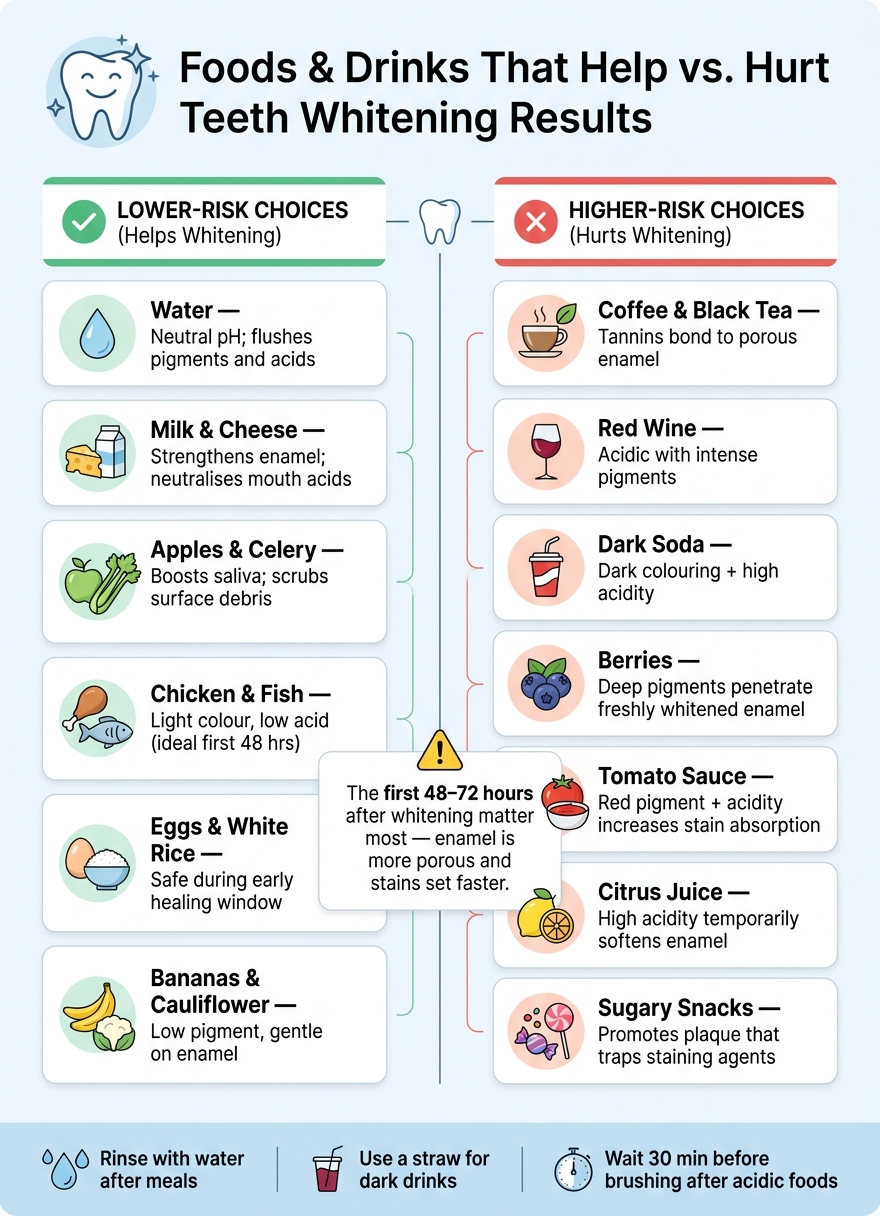
Foods & Drinks That Help vs. Hurt Teeth Whitening Results
Here’s a simple guide to help you pick lower-risk foods and drinks after whitening.
The first 24–48 hours matter most. Using a personal LED teeth whitening light can achieve great results, but maintenance is key. During that window, teeth can pick up stains more easily, so what you eat and drink can make a big difference.
Comparison Table: Lower-Risk Choices vs. Higher-Risk Choices
| Food or Drink | Effect on Whitened Teeth | Why | Swap |
|---|---|---|---|
| Water | ✅ Helps | Neutral pH; flushes pigments and acids | Drink throughout the day; rinse after meals |
| Milk & Cheese | ✅ Helps | Strengthens enamel; neutralises mouth acids | Good snack option |
| Apples & Celery | ✅ Helps | Boosts saliva; scrubs surface debris | Eat raw at the end of a meal |
| Coffee & Black Tea | ❌ Harms | High in tannins that bond to porous enamel | Use a straw; rinse with water after |
| Red Wine | ❌ Harms | Acidic with intense pigments that penetrate enamel | Sip water between glasses; rinse after |
| Dark Soda | ❌ Harms | Dark colouring combined with high acidity | Swap for clear sparkling water or use a straw |
| Berries | ❌ Harms | Deep pigments penetrate freshly whitened enamel | Rinse with water or follow with a piece of cheese |
| Tomato Sauce | ❌ Harms | Red pigment plus acidity increases stain absorption | Choose white sauces such as alfredo or garlic and oil |
| Citrus Juice | ❌ Harms | High acidity temporarily softens enamel | Drink through a straw; wait 30 minutes before brushing |
| Sugary Snacks | ❌ Harms | Promotes plaque that traps staining agents | Rinse with water after; brush 30–60 minutes later |
A quick rinse with water after dark or acidic foods can help cut down surface stains.
After stain-heavy foods or drinks, swish water for 10 seconds to help wash away pigments before they set.
Conclusion: Simple Daily Choices That Protect Your Whitening Results
Whitening starts to fade because teeth deal with stains and acids every day. The good news is that small, steady habits can help your results stick around longer.
The first 48 to 72 hours matter most, because enamel is temporarily more porous. During that window, it makes sense to be extra careful with anything that can stain teeth. After that, the goal is simple: limit stain contact as much as you can.
A few easy habits do most of the heavy lifting:
- Rinse after meals
- Use a straw for dark drinks
- Choose lower-risk foods when possible
That’s what helps protect whitening longevity.
With steady care, results can last 1 to 3 years.
For beauty and spa businesses in Canada, Smile360 Teeth Whitening Canada supports whitening aftercare with professional supplies and training.
FAQs
Can I drink coffee after teeth whitening?
It’s best to skip coffee right after teeth whitening because it can stain your teeth. Wait at least 30 minutes to give your enamel a bit of protection.
What foods are safest right after whitening?
The available information does not name any specific foods as the safest choice right after whitening.
So, the best way to handle this topic is to be clear: the source material did not provide food-specific guidance.
How often will I need a touch-up?
You’ll usually need a touch-up every 6 months to 2 years. The exact timing depends on your diet, oral hygiene, and day-to-day habits.