

Laser Whitening Sensitivity: What Helps
If your teeth feel sore after laser whitening, that’s common, and it usually settles within 24 to 72 hours. In my view, the best first steps are simple: use desensitizing toothpaste, avoid very hot or cold food and drinks, sip room-temperature water, eat low-acid light-coloured foods, and brush with a soft toothbrush.
Here’s the short version:
- Sensitivity often peaks in 12 to 24 hours
- The first 48 hours matter most
- Lukewarm food and drinks are less likely to trigger pain
- Desensitizing toothpaste with potassium nitrate, stannous fluoride, or sodium fluoride can help
- Mild, general sensitivity across several teeth is often normal
- Severe pain, pain in one tooth, or symptoms past about 1 week mean you should contact your provider
A few aftercare steps can lower discomfort and help you get through the first two days with less trouble. The main goal is to keep teeth calm while the whitening effect settles.
TOOTH WHITENING - How To STOP THE SENSITIVITY (Sensitive Teeth Solution) | From A Dentist
What helps most in the first 48 hours
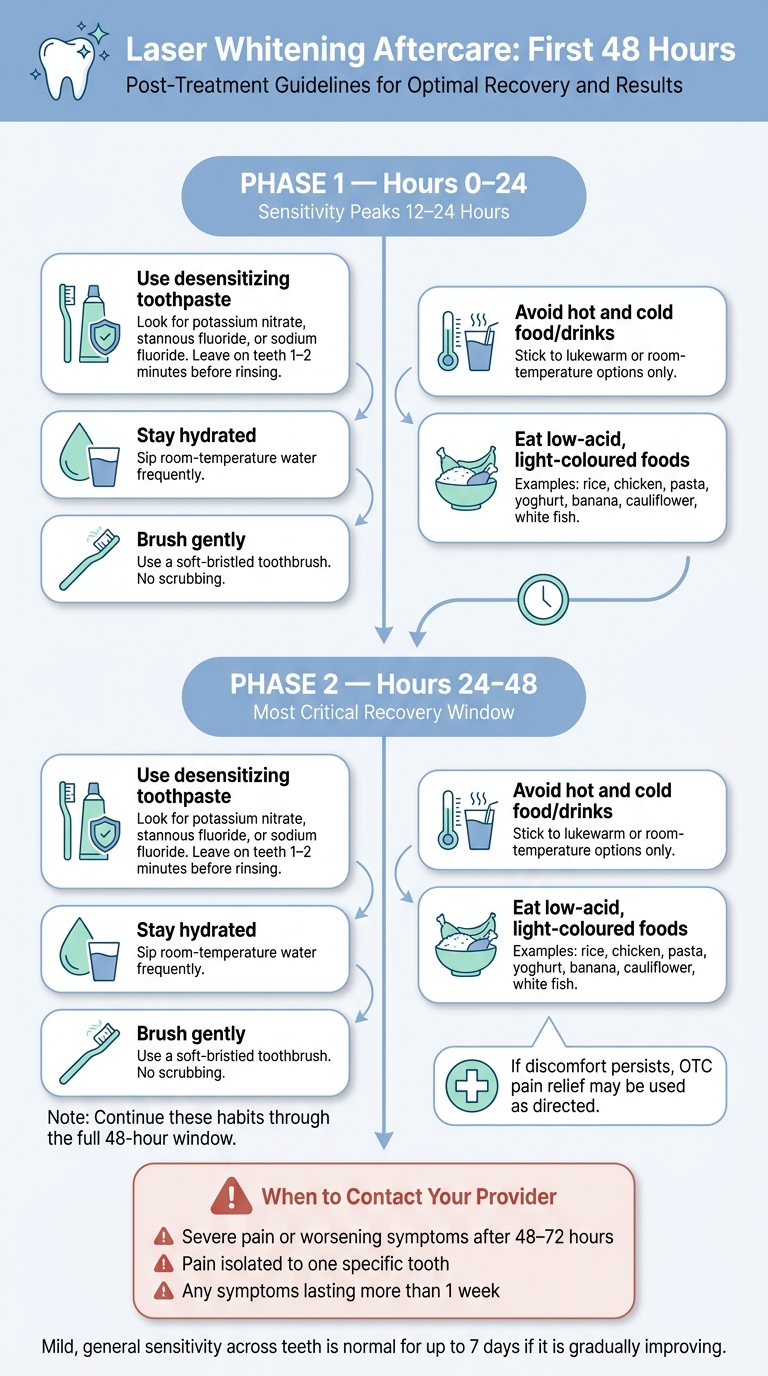
Laser Teeth Whitening Aftercare: First 48 Hours Timeline
Use these steps during the first 48 hours to cut discomfort as fast as you can.
Use desensitizing toothpaste with the right ingredients
Pick a desensitizing toothpaste with potassium nitrate, stannous fluoride, or sodium fluoride. Brush twice a day, then let the toothpaste sit on your teeth for 1 to 2 minutes before you rinse. If one spot feels worse than the rest, apply a small amount right to that area.
Temperature and hydration matter just as much during those first two days.
Avoid very hot and very cold food and drinks
Skip extreme temperatures for 24 to 48 hours. Lukewarm foods and drinks are usually the safest bet.
Next, keep your food and drink choices just as gentle.
Stay hydrated after treatment
Drink room-temperature water often to help your mouth stay comfortable and avoid irritation.
From here, the next step is choosing foods and comfort measures that won't trigger more sensitivity. These steps work best alongside careful food and drink choices.
Foods, drinks, and comfort steps that can ease discomfort
These choices work best alongside the temperature and hydration steps above.
Choose low-acid, light-coloured foods for the first 48 hours
For the first 48 hours, keep meals simple: low-acid and light-coloured. This matters for two reasons. Dark-coloured foods and drinks can stain freshly whitened teeth, and acidic foods and drinks can make sensitivity worse.
Think plain rice, chicken, pasta, yoghurt, milk, bananas, cauliflower, or white fish. The goal is to give your teeth a short break while the whitening effects settle.
Brush gently and use simple pain relief if needed
Use a soft-bristled toothbrush and brush gently. Don’t scrub. Your teeth and gums may feel a bit touchy right after whitening, so a lighter hand can help.
If discomfort sticks around, you can use simple over-the-counter pain relief as directed.
Comparison table: better post-whitening choices and what to avoid for a short time
| Item | Use or Avoid | Main Concern |
|---|---|---|
| Low-acid, light-coloured foods | ✅ Use | Less irritation, fewer stains |
| Soft-bristled toothbrush | ✅ Use | Gentle cleaning |
| Acidic foods and drinks | ⚠️ Avoid | Sensitivity |
| Dark-coloured foods and drinks | ⚠️ Avoid | Staining |
If discomfort continues, follow the signs below.
sbb-itb-accb75b
When sensitivity is normal and when to contact a provider
Not every twinge after whitening means something is wrong. Even so, if home care isn't taking the edge off, these signs can help you figure out whether what you're feeling is still within the normal range.
Signs that are usually normal
During the first 48 hours, mild, general sensitivity is expected. Brief, sharp reactions to hot or cold are also common. The discomfort should feel spread across the teeth, not limited to one single tooth, and it should slowly settle down. If you already had sensitive teeth before whitening, mild discomfort can last up to 7 days as long as it keeps improving.
Signs that need follow-up
Contact your provider if the pain is severe, gets worse after 48 to 72 hours, feels limited to one tooth, or is still there after about a week. Those signs need follow-up.
Comparison table: home care and signs that need assessment
| Situation | What to Do | Possible Concern |
|---|---|---|
| Mild, general sensitivity across teeth | Observe for improvement over 2–3 days | Normal post-treatment response |
| Short, sharp reactions to temperature | Observe for improvement over the next few days | Normal post-whitening symptom |
| Sensitivity lasting up to 7 days (pre-existing sensitivity) | Continue to monitor if it's improving | Extended but normal for sensitive teeth |
| Severe pain or worsening symptoms after 48–72 hours | Contact provider promptly | Needs professional assessment |
| Pain localized to one specific tooth | Contact provider promptly | Needs professional assessment |
| Any symptom lasting more than about 1 week | Contact provider promptly | Needs professional assessment |
If your symptoms line up with the follow-up signs, contact the provider who performed the treatment.
Conclusion: Make aftercare part of Every Whitening Service
The fastest relief usually comes from a few simple steps: desensitizing toothpaste, temperature control, hydration, and low-acid foods during the first 48 hours.
The best way to prevent problems is to give every client a clear aftercare handout before they leave the chair. Send them home with written instructions that cover toothpaste ingredients, food choices, and warning signs. That small step cuts down on confusion and helps prevent avoidable follow-up calls.
Smile360 Teeth Whitening Canada also offers training resources for provider education. Their training resources help providers standardize aftercare instructions.
When clients know what helps and what to avoid, sensitivity usually stays brief and manageable.
FAQs
Can I drink coffee after laser whitening?
It’s best to skip coffee right after your laser teeth whitening treatment. Dark-coloured drinks like coffee can stain your enamel while your teeth are more porous and sensitive after the procedure.
To help protect your results and cut down on discomfort, stick with water or other light-coloured drinks during the first post-treatment period.
Should I stop whitening if my teeth are sensitive?
If your teeth are sensitive, pause or stop whitening and switch to a non-peroxide option. Peroxide can sometimes irritate teeth and gums, so this is often the safer move when discomfort starts.
It also helps to use sensitivity-friendly aftercare and pay attention to peroxide concentration limits where they apply.
If the sensitivity is strong or doesn’t ease after you stop, contact your provider for guidance.
How do I know if the pain is not normal?
Teeth whitening is usually safe and non-invasive when it’s done by a trained technician. That said, if the discomfort feels like more than the usual mild sensitivity, reach out to a professional.
If the pain doesn’t go away, you have an unexpected reaction, or you’re concerned about your oral health after treatment, contact your provider or a dental professional.