

Best Practices for Post-Whitening Care
After teeth whitening, your enamel becomes more porous, making it easier for stains to set in. The first 48–72 hours are crucial for maintaining your results and managing sensitivity. Here’s what you need to know:
- Avoid staining foods and drinks: Skip coffee, tea, red wine, dark sodas, and acidic foods. Tobacco products are also a no-go.
- Stick to a "White Diet": Opt for light-coloured foods like chicken, white rice, cauliflower, and plain yogurt. Drink water or milk.
- Manage sensitivity: Use desensitizing toothpaste with potassium nitrate or stannous fluoride. Avoid very hot or cold foods.
- Daily oral care matters: Brush gently with non-abrasive toothpaste, floss daily, and rinse with an alcohol-free fluoride mouthwash.
- Long-term tips: Schedule touch-ups every 6–12 months and reduce exposure to staining agents like coffee or tobacco.
Simple habits and the right products can help keep your smile bright for 1–3 years.
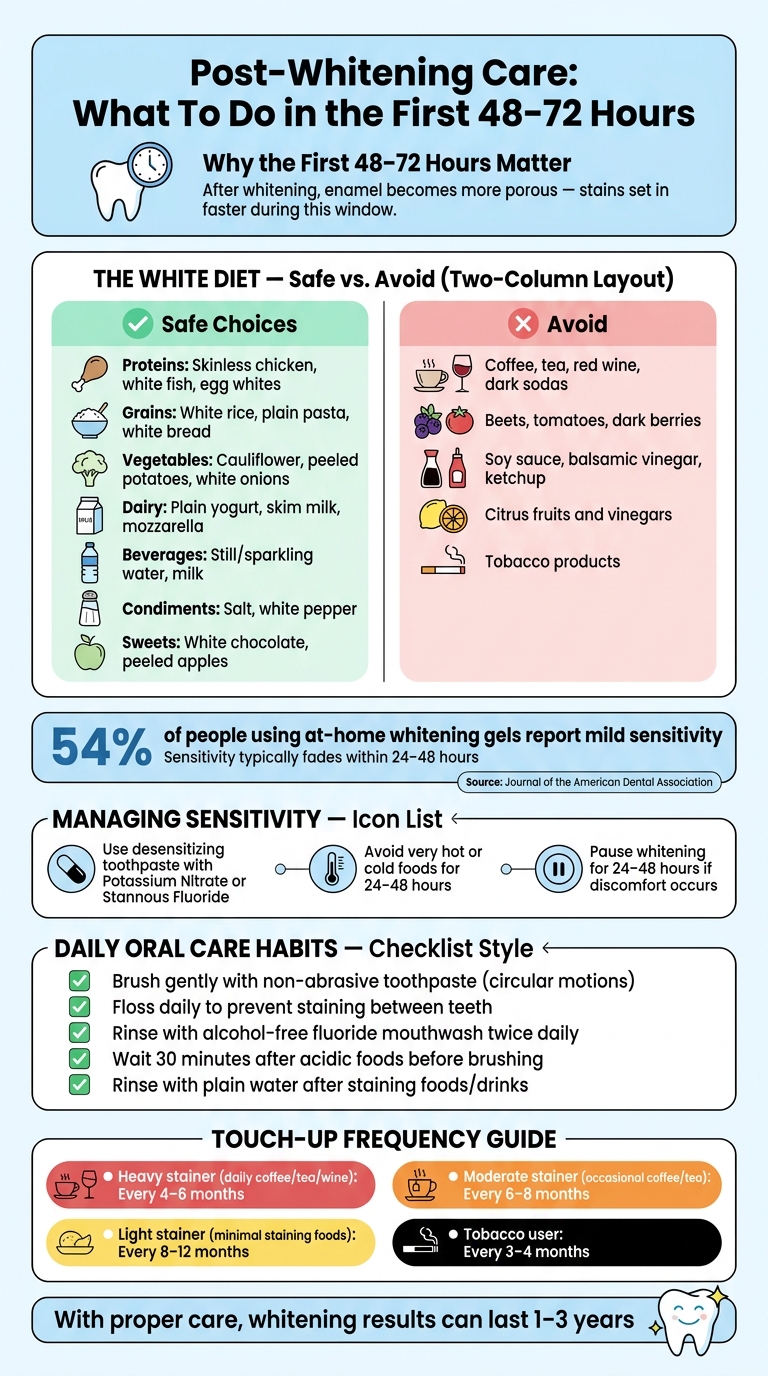
Post-Whitening Care: What To Do in the First 48–72 Hours
Do’s & Don’ts After Teeth Whitening | Smile Signature Bangkok Dental
Maintaining your results often starts with using high-quality professional treatment kits designed for safety and efficacy.
sbb-itb-accb75b
Post-Whitening Care in the First 48 Hours
The first 48 hours after teeth whitening are critical for keeping your results intact. Making smart dietary choices during this time can play a big role in preserving that bright smile.
Foods and Drinks to Avoid
It’s a good idea to avoid foods and drinks that are deeply coloured, as they can quickly stain your teeth. As Reflections Dental Group explains:
"If a beverage can stain a white cotton shirt, it can certainly stain your teeth."
This means steering clear of coffee, black tea, red wine, dark sodas, and juices like grape or cranberry. Dark-coloured foods such as beets, tomatoes, dark berries, soy sauce, and balsamic vinegar should also be avoided. Additionally, acidic foods like citrus fruits and vinegars can weaken enamel, making it more prone to staining. Aurora North Dental highlights this by saying:
"To protect your results, we recommend avoiding highly acidic foods for at least 24–48 hours after whitening."
Tobacco products are another no-go during this period, as tar and nicotine can cause immediate discolouration on your newly whitened teeth. Instead, focus on lighter-coloured foods that promote enamel recovery. For those maintaining results at home, using a personal LED teeth whitening light can help sustain your brightness between professional treatments.
Safe Foods and Drinks to Choose
For the first 48 hours, stick to a "White Diet" by opting for light-coloured, non-pigmented foods. Here’s a guide to help you make the best choices.
Lean proteins like skinless chicken breast, white fish, and egg whites are safe options. Pair them with carbohydrates such as white rice, plain pasta with white sauce, or white bread. For vegetables, choose items like cauliflower, peeled potatoes, and white onions. Dairy products like plain yogurt, skim milk, and white cheeses (e.g., mozzarella) are also great for supporting enamel strength.
When it comes to beverages, still or sparkling water is your best bet. If you can’t skip your coffee or tea, consider drinking it through a straw and adding milk to reduce staining. Rinsing your mouth with water after meals can help wash away any lingering pigments.
| Category | Safe Choices | Foods and Drinks to Avoid |
|---|---|---|
| Proteins | Skinless chicken, white fish, egg whites | Red meat, dark-fleshed fish |
| Grains | White rice, plain pasta, white bread (no crust) | Whole wheat bread, coloured pasta sauces |
| Vegetables | Cauliflower, peeled potatoes, white onions | Beets, dark leafy greens, tomatoes |
| Dairy | Plain yogurt, skim milk, mozzarella | Coloured yogurts, aged yellow cheeses |
| Beverages | Still or sparkling water, milk | Coffee, tea, red wine, dark sodas, fruit juices |
| Condiments | Salt, white pepper | Soy sauce, balsamic vinegar, ketchup |
| Sweets | White chocolate, peeled apples | Dark chocolate, berries, coloured candies |
How to Manage Sensitivity After Whitening
Experiencing tooth sensitivity after whitening treatments is quite common. In fact, research in the Journal of the American Dental Association shows that about 54% of people using at-home 15% carbamide peroxide whitening gels report mild discomfort. The good news? This sensitivity typically fades within 24 to 48 hours as your enamel naturally rehydrates and its pores start to seal again.
If you notice sensitivity, it’s best to take a break from whitening for 24 to 48 hours. Trying to push through the discomfort can make things worse.
Desensitizing Products That Can Help
Certain products can ease sensitivity and even help repair your enamel. Look for these key ingredients:
- Potassium nitrate: Calms nerve signals inside the tooth.
- Stannous fluoride: Blocks microscopic dentin tubules that transmit pain signals.
- Remineralizing gels: Contain ingredients like Amorphous Calcium Phosphate (ACP) or Casein Phosphopeptide-Amorphous Calcium Phosphate (CPP-ACP) to rebuild enamel over time.
Here’s a quick breakdown of helpful products:
| Product Type | Key Ingredient | Best For |
|---|---|---|
| Desensitizing Toothpaste | Potassium Nitrate / Stannous Fluoride | Quick relief from sharp, sudden pain |
| Remineralizing Gel | ACP, CPP-ACP, or Fluoride | Long-term enamel repair and prevention |
| Therapeutic Fluoride Rinse | Sodium Fluoride | Daily maintenance and enamel protection |
For immediate relief, apply a pea-sized amount of desensitizing toothpaste directly to the sensitive spots and leave it on for a few minutes before rinsing. To prepare your teeth in advance, consider using a desensitizing or remineralizing toothpaste for 10 to 14 days before starting your whitening treatment.
Handling Temperature Sensitivity
Whitening treatments can temporarily make your enamel more porous, increasing its sensitivity to hot and cold. This means even a sip of ice water or a bite of hot soup can feel like a shock to your teeth.
To minimise discomfort, stick to room-temperature or lukewarm foods and beverages for the first 24 to 48 hours after whitening. Avoid iced drinks, frozen treats, steaming soups, and hot coffee or tea until the sensitivity subsides. If you happen to eat or drink anything acidic during this time, rinse your mouth with plain water right after to reduce irritation on exposed dentin tubules.
Daily Oral Hygiene to Keep Teeth White
Once sensitivity fades, your daily oral care routine plays a big role in maintaining those pearly whites. Whitening results usually last between one and three years. The secret? Keeping plaque at bay. Plaque acts like a magnet for stains, holding onto the dark pigments from foods and drinks right against your enamel.
Brushing and Flossing
An electric toothbrush can be a game-changer for removing stains. When brushing, stick to gentle circular motions instead of scrubbing back and forth. Overly aggressive brushing can wear down your enamel. Use a non-abrasive toothpaste every day, and save whitening pastes for just once or twice a week to gently polish surface stains without causing damage. Skip charcoal pastes altogether - while trendy, they’re often too harsh and can scratch enamel, which makes your teeth more prone to future staining.
And don’t forget to floss. As the Bianca Bright Dental Team explains:
"Yellow lines between otherwise white teeth is a telltale sign of someone who whitens but doesn't floss."
Stains often start between teeth, where plaque traps pigments. Neglecting flossing can undo all your other efforts. Also, wait at least 30 minutes after eating acidic foods before brushing. Acid softens enamel temporarily, and brushing too soon can cause tiny abrasions. Instead, rinse your mouth with plain water right after meals to wash away staining pigments before they settle. These small habits go a long way toward preserving your bright smile.
Using Fluoride Products and Mouthwash
Adding fluoride products and mouthwash to your routine is an easy way to protect your teeth. Use an alcohol-free, antimicrobial mouthwash twice a day - once in the morning and again at night. Alcohol-based mouthwashes can dry out your mouth, leaving enamel more vulnerable to staining, so it’s best to stick with the alcohol-free kind.
"Rinsing with an antimicrobial mouthwash helps control bacteria levels, reducing the risk of plaque buildup and staining." - Aurora North Dental
Staying hydrated also helps. Saliva naturally neutralises acids and washes away debris. If you’ve just had coffee, tea, or anything with strong colouring, a quick 30-second rinse with water can significantly cut down on stain buildup between brushings. These simple steps can make a noticeable difference in keeping your teeth white over time.
Long-Term Strategies to Maintain Whitening Results
Keeping your smile bright over the long term requires more than just immediate care - it’s about building habits that protect your teeth from discolouration. What you eat, drink, and how you care for your teeth daily all play a role in maintaining those whitening results.
When and How to Do Touch-Up Treatments
Even with consistent care, stains can creep back over time. That’s where touch-up treatments come in. Scheduling a touch-up every 6 to 12 months with professional-grade take-home trays is a reliable way to keep your teeth looking their best. These sessions help restore brightness before stains become noticeable.
How often you need a touch-up depends on your habits. If you’re a regular coffee or tea drinker, you might need one every 4 to 6 months. On the other hand, if you rarely consume staining foods or drinks, a touch-up every 8 to 12 months may be enough. These periodic treatments enhance your daily care routine rather than replace it.
| Staining Risk | Touch-Up Frequency | Suggested Products |
|---|---|---|
| Heavy (daily coffee, tea, red wine) | Every 4–6 months | Whitening toothpaste 2–3×/week, whitening mouthwash |
| Moderate (occasional coffee or tea) | Every 6–8 months | Whitening toothpaste 2×/week |
| Light (minimal staining foods) | Every 8–12 months | Whitening toothpaste 1×/week |
| Tobacco user | Every 3–4 months | Daily whitening toothpaste, whitening mouthwash |
For professional-grade whitening products, Smile360 Teeth Whitening Canada (https://smile360.ca) offers a range of take-home kits and accessories to help maintain your smile.
It’s important to avoid overdoing touch-ups, as excessive use can lead to a translucent or bluish tint. Stick to the recommended intervals and use high-quality, professional-grade products to ensure the best results.
Habits That Cause Staining to Cut Back On
To keep your teeth white for the long haul, reducing exposure to common staining agents is crucial. Coffee, tea, and red wine are among the biggest offenders. If quitting these entirely feels impossible, try simple adjustments like using a straw to bypass your front teeth or adding milk to coffee or tea to reduce staining pigments. These small tweaks can make a big difference.
Tobacco use is another major cause of discolouration. Smoking or vaping can stain teeth almost immediately after whitening. Cutting back - or better yet, quitting - can significantly extend the life of your whitening results while also improving your overall oral health.
Products to Use for Post-Whitening Care
Once you've tackled daily oral hygiene and managed sensitivity, the next step is picking the right products to maintain your whitening results. These products not only help preserve your brighter smile but also protect enamel, ease sensitivity, and fend off new stains.
Remineralizing gels are a great first step after whitening. They restore minerals to enamel and help with sensitivity, especially when applied immediately post-treatment. Look for formulas containing potassium nitrate, which calms nerve endings. For example, the Smile360 Post Treatment Gel comes in a 3 ml syringe for $6.95 CAD, offering one to three applications per syringe. To use, apply the gel for five minutes, then avoid eating, drinking, or rinsing for 30 minutes to let it fully absorb. After using the gel, your daily oral care routine can help further strengthen enamel.
Switching to a soft-bristled toothbrush is a must after whitening since enamel is more sensitive and needs gentle care. Pair it with a non-abrasive sensitivity toothpaste containing potassium nitrate for added relief. Whitening toothpastes, though effective at removing surface stains, should only be used once or twice a week to avoid overdoing it. This balanced approach preps your teeth for the next step: fluoride mouthwash.
Using a fluoride mouthwash daily helps rebuild enamel and guards against decay. Opt for an alcohol-free version, as alcohol can dry out your mouth, making teeth more prone to staining.
For quick fixes between whitening sessions, a whitening pen is a handy tool. The Colgate Optic White Overnight Teeth Whitening Pen, for instance, brightened teeth by 1.9 shades in just one week. It's compact, making it easy to keep your smile fresh on the go.
Product Comparison Table
| Product Type | Enamel Strengthening | Sensitivity Reduction | Alcohol-Free | Key Feature |
|---|---|---|---|---|
| Remineralizing Gel | High | High | Yes | Potassium nitrate; applied by brush/tray |
| Soft-Bristled Toothbrush | Neutral | High | N/A | Gentle on sensitive enamel |
| Sensitivity Toothpaste | Moderate | High | Yes | Non-abrasive; calms nerve endings |
| Fluoride Mouthwash | High | Moderate | Yes (if specified) | Strengthens enamel; prevents decay |
| Whitening Pen/Serum | Low | Low to Moderate | Yes | Portable; great for touch-ups |
Conclusion: Key Steps for Post-Whitening Care
Keeping your smile bright after whitening comes down to consistent care. Right after your treatment, it’s important to focus on preserving those results. Stick to light-coloured foods and steer clear of coffee, tea, and red wine - these can quickly undo your hard work. With proper care, your professionally whitened teeth can stay bright for 1 to 3 years.
If you experience temporary sensitivity, there are a few simple ways to manage it. Avoid very hot or cold foods and drinks, hold off on brushing for a few hours, and switch to a soft-bristled toothbrush with non-abrasive toothpaste. Once you’ve tackled the immediate aftercare, maintaining a solid daily routine is key. Brush twice a day, floss daily, and rinse with an alcohol-free fluoride mouthwash to help prevent staining.
For ongoing maintenance, consider professional touch-ups every 6 to 12 months and schedule dental cleanings every six months to remove surface stains before they settle. By following these steps and the recommendations from Smile360 Teeth Whitening Canada, you can enjoy a radiant smile that lasts.
FAQs
Can I drink coffee if I use a straw?
Using a straw when drinking coffee can reduce how much the liquid comes into contact with your teeth. This small habit may help protect your teeth from staining, making it easier to maintain a brighter smile over time.
How do I know if post-whitening sensitivity is normal?
Post-whitening sensitivity is quite common and typically lasts anywhere from a few hours to 48 hours after the treatment. During this time, you might feel mild discomfort, which is generally nothing to worry about. However, if the sensitivity persists for more than a week, it’s a good idea to reach out to your dentist. Prolonged sensitivity could indicate an underlying issue that needs professional attention.
Will whitening work on crowns or veneers?
Whitening treatments are ineffective on crowns or veneers. These dental restorations are crafted from nonporous, stain-resistant materials such as porcelain, which do not react to bleaching agents.