

Spa Staff Training for Whitening Compliance
If you offer teeth whitening in a Canadian spa, staff training needs to cover 6 core areas before the first client sits down. In most cases, this work falls under personal service setting rules, so the owner needs clear staff training, written procedures, and records that show each step was followed.
Here’s the short version: I’d train staff on hand hygiene, client screening, gel and SDS use, eye protection and chair setup, room cleanup, and incident reporting. I’d also keep supplier guides, intake forms and records, cleaning logs, and insurer-approved documents in one file, because a missing document can create problems just as fast as a service mistake.
At a glance, the article comes down to this:
- Train before service starts
- Screen every client before gel is opened
- Follow product labels and SDS exactly
- Use eye protection for both client and staff
- Clean and reset the room after each appointment
- Record spills, burns, reactions, and equipment issues right away
- Review training at onboarding, after changes, and at least once a year
One point stands out: even small label errors can lead to the wrong amount, wrong temperature, or wrong storage step. That matters when products use units like mL, %, °C, oz, or inches on the same packaging.
| Training area | What staff need to do |
|---|---|
| Infection control | Wash hands, use PPE, log hygiene steps |
| Client screening | Check medications, allergies, dental work, oral changes |
| Gel handling | Read label, SDS, expiry, storage, and PPE steps |
| Eye and chair safety | Confirm eyewear and stable client positioning |
| Room cleanup | Disinfect surfaces, discard single-use items, reset station |
| Incident reporting | Stop service, document the issue, follow local and insurer steps |
So if I had to sum up the full article in one line, it would be this: safe whitening in a spa depends on trained staff doing the same checked process every time.
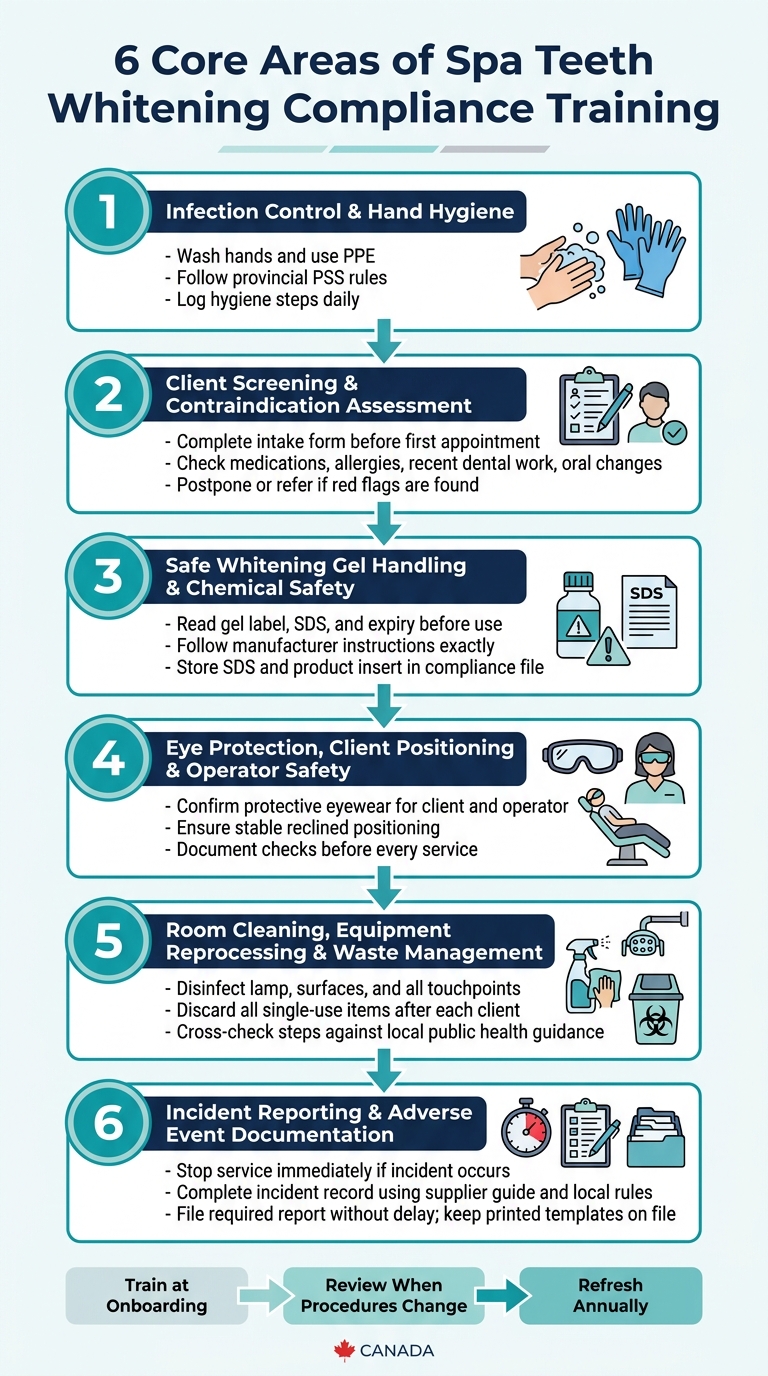
6-Step Spa Teeth Whitening Compliance Training Framework
Why Whitening Compliance Training Matters in Canadian Spas
Whitening services can lead to infection risks, chemical exposure, and service mistakes when staff don't get proper training. Training helps keep products and equipment aligned with provincial and territorial public health rules, plus workplace safety requirements. That supports safer, more consistent service from one appointment to the next.
The goal is simple: a repeatable service every shift, from setup to documentation. The next six sections show how to turn that standard into day-to-day practice.
What Compliant Whitening Training Should Achieve
Good training should teach staff how to follow the supplier guide, use products and equipment the right way, and keep records organized so team members can find what they need fast.
How Training Fits Into Onboarding and Refresher Schedules
Managers should make whitening compliance part of onboarding, planned refreshers, and SOP reviews whenever products or procedures change. That way, training stays current instead of turning into a one-time checkbox.
| Training Phase | When It Happens | Key Focus |
|---|---|---|
| Onboarding | Before first whitening service | System setup, equipment operation, initial safety protocols, review of the supplier-provided Training Guide |
| SOP Review | When procedures or products change | Regulatory alignment, insurance verification |
| Refresher | Annually or after an incident | Product handling and documentation |
Download and archive digital manuals and guides as soon as they become available. Portal access can expire, and that can leave staff scrambling when they need a file in the middle of a shift.
Why Unit Conversions and Label Reading Matter
Labels may show both metric and imperial units. Staff might see mL, %, °C, oz, and inches on labels and SDS documents. If someone reads the wrong number or the wrong unit, the mistake can snowball fast.
Training should include a short, practical module on reading product directions with care. Staff need to spot each unit and find the right figure on the label or SDS. That label-reading habit supports the gel-handling rules that come next.
sbb-itb-accb75b
1. Infection Control and Hand Hygiene
Infection control starts with provincial and territorial personal service setting rules, plus daily hand hygiene logs. These are the basics staff rely on for every appointment.
Follow the supplier guide and spa protocol so equipment and supplies match service standards.
Dispose of gloves and masks under local PSS waste rules. In some areas, those rules separate general waste from biohazardous waste.
Keep the supplier Training Guide, training completion records, and hygiene logs in the compliance file. Download and archive supplier materials as soon as they become available.
Once hygiene controls are in place, screen each client for contraindications before service.
2. Client Screening and Contraindication Assessment
Screen every client with a client intake form before their first whitening appointment. This step matters because it helps your team spot problems early, before service starts.
The intake form should cover:
- current medications
- known allergies
- recent dental work
- changes in oral tissues
Train staff to look for red flags and act on them. If something looks off, postpone the service or refer the client to a dentist. Put simply: the intake result should decide whether the appointment moves ahead.
Keep completed intake forms and staff notes on file. Follow provincial and territorial guidance for personal service settings, and use your supplier's training guide for screening criteria. It also makes sense to review the form with your insurer before you start using it.
During screening, wear gloves when handling intraoral tools or touching surfaces that come into contact with saliva. Use single-use barriers or a specialized treatment bed cleaner on shared equipment, and make sure you have proper lighting for oral checks. Finish the full screening process before any whitening gel is opened or applied.
3. Safe Whitening Gel Handling and Chemical Safety
Once a client passes screening, staff need to handle each whitening gel exactly as the label says. That matters for one simple reason: proper handling helps cut down soft-tissue irritation and accidental ingestion. Staff should follow the gel label, SDS, and any provincial, territorial, and workplace safety rules that apply.
Staff also need to know the difference between gel types and use each one based on its own directions for application and risk control. Follow the manufacturer's instructions exactly.
Keep the SDS, training guide, and product insert in the compliance file so staff can find them fast when needed.
Before first use, confirm the gel matches your spa's PSS protocol and insurer requirements. That helps set up safe eye protection and application positioning in the next step.
4. Eye Protection, Client Positioning, and Operator Safety
After gel handling, treatment safety comes down to two things: proper eyewear and stable reclined positioning for both the client and the operator.
Check and document eye protection for the client and operator before every service. Make sure the operator’s eye protection is intact and ready to use. Once the client leaves the chair, cleaning and reprocessing begin.
Stable reclined positioning can help lower the risk of gel contact, swallowing, neck strain, and slips when clients get into or out of the chair. Staff should know how to assist clients when needed and keep an eye on comfort during the treatment. Use supplier guides alongside local PSS rules, and check insurer coverage before using any new treatment setup. After treatment, move straight to room turnaround and equipment reprocessing.
5. Room Cleaning, Equipment Reprocessing, and Waste Management
As soon as the client leaves, begin room turnover. Follow your written cleaning procedure step by step so the space is ready for the next client.
Clean and disinfect the whitening lamp, treatment surfaces, and every touchpoint used during the service. Throw out all single-use items after one client, including whitening pens, bamboo toothbrushes, gloves, and gauze.
When handling used consumables or contaminated surfaces, put on new gloves and the required PPE. Keep supplier guides and cleaning instructions on file.
Before putting your process into use, cross-check your cleaning, reprocessing, and waste steps against local public health guidance and your insurer’s requirements.
If there’s a spill, breakage, or any exposure during cleanup, move straight to incident reporting.
6. Incident Reporting, Adverse Event Documentation, and Regulatory Follow-Up
If a spill, burn, or adverse reaction happens during treatment or cleanup, stop the service right away. Then move straight to incident reporting. Complete the incident record using your supplier guide and any local rules, and file the required report without delay. In Canada, the spa owner or purchaser of the whitening system is responsible for meeting provincial personal service setting (PSS) standards.
Provincial or territorial PSS guidance sets out which serious events must be reported to local public health authorities. This can include issues like chemical burns or severe allergic reactions.
Insurance matters too. Before you offer whitening services, check with your insurer about coverage and follow-up steps. It helps to use one incident report form that meets both insurer and PSS requirements. Many supplier training guides include incident report templates, so keep a printed copy on file. That way, staff can follow the process even if they can't get into a portal at the time.
Reference Tables to Use Alongside Each Training Topic
These tables turn the six training topics above into daily checklists staff can use on the spot. Keep them in your training binder and post copies at each work station so they’re easy to grab during a busy shift.
Use these sheets alongside provincial rules and supplier instructions. The next section covers Canadian training and business resources for supply support. They’re meant to support day-to-day work, not replace official national, provincial, and local guidance.
Contraindication Triage Chart
Place this at the reception desk or client intake area. Use it during screening before the client enters the treatment room.
| Condition or Finding | Proceed with Caution | Postpone | Do Not Treat | Required Follow-Up |
|---|---|---|---|---|
| Active gingivitis or gum inflammation | ✓ | Reassess before treatment | ||
| Recent dental work | ✓ | Reassess before treatment |
Gel Handling and SDS Reference
Post this inside the chemical storage cabinet or above the prep station.
| Item | Storage Requirement | Temp / Condition | Expiry Check | PPE Needed | Spill Response |
|---|---|---|---|---|---|
| Peroxide whitening gel | Cool, dry; refrigerate if specified by manufacturer | As specified by manufacturer | Check batch date before each use | As listed in the SDS | Follow SDS |
| Non-peroxide whitening gel | Cool, dry storage away from direct light | As specified by manufacturer | Check batch date before each use | As listed in the SDS | Follow SDS |
PPE and Lamp Safety Checks
Affix this to the whitening lamp stand or the wall beside the treatment chair. Verify it before activating the lamp for every client.
| Equipment Type | Eye Protection Required | Client Positioning Check | Operator Positioning Check | Pre-Use Verification |
|---|---|---|---|---|
| Whitening lamp | Protective eyewear against blue light or UV emissions | Follow written spa protocol | Follow written spa protocol | Perform pre-use check before activation |
Room Turnaround Checklist
Laminate this and keep it at the cleaning supply station. Staff should initial and time-stamp each completed task between appointments.
| Task | Frequency | Product Used | Contact Time | Initials | Completion Time |
|---|---|---|---|---|---|
| Treatment room surfaces | Between appointments | Approved disinfecting product | Per product label | ||
| Equipment touch points | Between appointments | Approved disinfecting product | Per product label | ||
| Disposable items | Between appointments | Single-use disposal | N/A | ||
| Check gel stock and expiry dates | Daily | N/A | N/A |
Incident Severity and Follow-Up Actions
Keep one copy in the administrative office and one inside the front cover of the incident logbook. Review incident response and follow-up procedures with your insurer before rolling them out.
| Incident Type | Severity Level | Immediate Action | Documentation Required | Client Follow-Up | Escalation Path |
|---|---|---|---|---|---|
| Adverse event or equipment issue | Per site procedure | Stop service and follow site procedure | Record the incident in the logbook | Follow up as needed | Review insurer and provincial/territorial guidance |
Canadian Training Resources and Supply Support
Provincial and Territorial Personal Service Setting Guidance
Start with your province or territory's Personal Service Setting guidance, then match staff training to local health and safety rules. Infection prevention and service standards are still the purchaser's responsibility, and all products and equipment need to be used according to provincial, territorial, and local rules.
That baseline helps you judge whether a supplier's training package covers what your team needs.
Supplier Training and Consumables Support
Canadian supply partners that know the local regulatory landscape can help keep service delivery consistent. Smile360 Teeth Whitening Canada supplies professional whitening systems, equipment, and consumables for spa, salon, and dental professionals across Canada. Its product line includes whitening gels, whitening machines, treatment kits, disposable gloves, and disinfecting wipes.
For staff training, Smile360 offers an online training portal and a downloadable Training Guide to support documented onboarding and refresher procedures. Those supplier materials are a good place to begin, but they don't replace the need to check your own provincial rules.
The next step is simple: see whether the provider gives staff the documents needed for training and for compliance records.
How to Assess a Training Provider or Supply Partner
Look for a provider that offers the core documents and day-to-day supplies your team will use, such as:
- Downloadable training guides
- SDS sheets
- Equipment manuals
- Intake or waiver templates
- Routine consumables like gloves, wipes, and gels
Also check whether the training materials support onboarding, refreshers, and recordkeeping, not just the first setup. A good partner should also say plainly that compliance remains the purchaser's responsibility.
Conclusion
Compliant whitening services rest on one simple system: trained staff, written procedures, and clear records that show the work was done. For whitening, that means documented training in six areas: infection control, client screening, gel handling, eye protection, room cleaning, and incident reporting.
Follow supplier guidance and starter kit instructions exactly. The responsibility for compliant use sits with the purchaser. Before you launch whitening services, or update training protocols, check with your insurer to make sure your coverage matches the treatments you plan to offer.
When training records, day-to-day practice, and supplier instructions all line up, staff can deliver the same safe process every shift. Keep insurer confirmation, competency checks, and cleaning logs in the compliance file. Compliance comes from trained staff, written records, and steady follow-through.
FAQs
Who is responsible for whitening compliance in a spa?
The business owner or buyer is responsible for making sure teeth whitening services and products follow national, provincial, and local rules, along with any requirements set by industry bodies.
In Canada, there’s no specific national licence for cosmetic teeth whitening. But operators still need to follow Health Canada standards, including keeping hydrogen peroxide at 25% or less. Spa owners should also check that their whitening treatments and safety protocols are covered by their liability insurer.
What should staff do if a client has recent dental work or oral changes?
If a client mentions recent dental work or changes in their mouth, staff should note it during screening. That step helps the team decide if the client is a good fit for whitening.
Staff should also look at how those changes, along with any current restorations, could affect the final result. Smile360 Teeth Whitening Canada offers training to help teams screen clients safely and stay compliant.
Which records should a spa keep for whitening compliance?
Spas should keep client records in a secure way for compliance and risk management. That includes signed consent forms, health details, treatment dates, products used, and treatment notes.
They should also keep before-and-after photos with client consent, records of any adverse reactions or concerns, and notes from post-treatment follow-ups done 24 to 48 hours after the service, in line with PIPEDA.