

Checklist for Teeth Whitening Client Documentation
Professional teeth whitening requires thorough documentation to ensure client safety, regulatory compliance, and practice protection. Here's what you need to know:
- Intake Forms: Collect personal details, medical history, and baseline tooth shade. Identify contraindications like pregnancy, untreated decay, or enamel issues.
- Consent Forms: Explain treatment risks, expected outcomes (lasting 1–3 years), and gain approval for photos if used for marketing.
- Privacy Acknowledgement: Ensure compliance with Canadian privacy laws (PIPEDA) by detailing data use and storage.
During treatment:
- Clinical Notes: Record pre-treatment assessments, product details (peroxide %, pH, batch numbers), and session outcomes.
- Contraindications: Document referrals for conditions like periodontal disease or intrinsic staining.
- Infection Control: Log sterilization and equipment maintenance.
Post-treatment:
- Aftercare Instructions: Provide guidelines on avoiding staining foods and confirm client understanding.
- Follow-Up: Track results with shade comparisons, photos, and client feedback.
Maintain secure, PIPEDA-compliant records for at least 10 years to meet Canadian legal standards and protect client information.
For tools and templates, Smile360 Teeth Whitening Canada offers resources like training courses and waiver templates to simplify your documentation process.
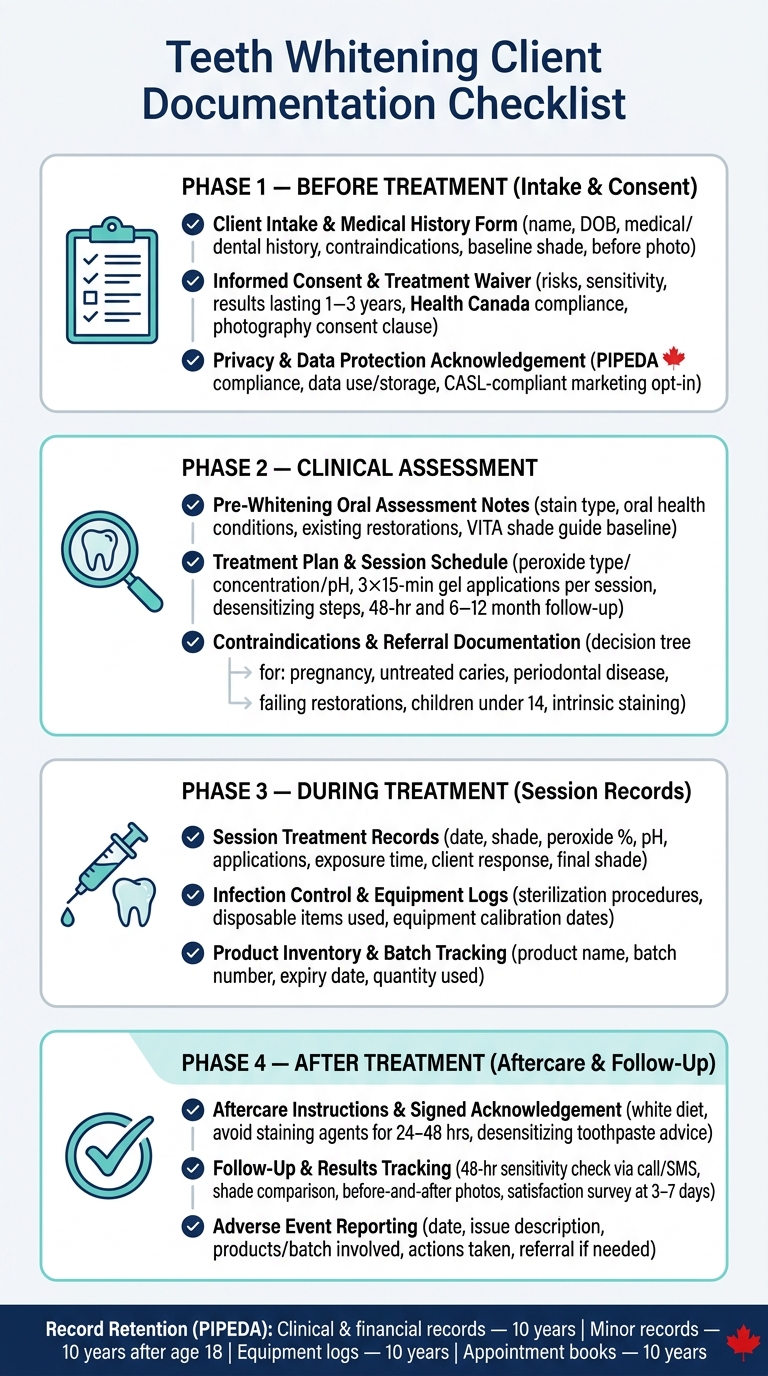
Teeth Whitening Client Documentation Checklist
Forms and Templates You Need For Your New Teeth Whitening Business
If you are just starting out, you can also find these documents included in our professional business starter kits.
sbb-itb-accb75b
Client Intake and Consent Documents
Before starting any whitening treatment, it's essential to have three key documents ready. These forms ensure legal compliance, protect client health, and safeguard your practice. This includes maintaining high hygiene standards with tools like a UV sterilizer for instruments.
Client Intake and Medical History Form
This form collects the client's personal and medical information to determine if they’re a good candidate for treatment. At a minimum, it should include the client’s full name, date of birth, and contact details, along with a complete medical and dental history.
Certain conditions - like untreated decay, enamel demineralization, pregnancy, or intrinsic stains such as tetracycline staining - may not respond well to whitening and require special attention. The form should also document current medications, allergies, and a baseline tooth shade using a shade guide. Record this initial shade in writing and take a "before" photo (with the client’s consent) to track progress. Ensure the form is signed and dated in the DD/MM/YYYY format.
Once this is complete, move on to securing informed consent from the client.
Informed Consent and Treatment Waiver
This document ensures the client fully understands the treatment process, potential risks, and aftercare requirements.
"Clearly state expectations with a concise consent form that covers risks, alternatives, and post-treatment care." - Frontier Dental
The consent form should outline key details such as the possibility of temporary tooth sensitivity, mild soft-tissue irritation, and variability in results depending on the client’s lifestyle and oral hygiene. It should also set realistic expectations for how long the results will last - typically one to three years. Additionally, the form should confirm that the whitening products comply with Health Canada’s safety standards for peroxide concentration and pH levels.
If you plan to use before-and-after photos for documentation or marketing, include a separate photography consent clause that the client can sign independently.
After securing treatment consent, the next step is to address privacy and data protection.
Privacy and Data Protection Acknowledgement
When handling client information, follow the guidelines outlined by PIPEDA. This document explains how the client’s data will be collected, stored, and used, as well as who will have access to it.
Be specific about where the records are kept (physical or digital), which staff members can access them, and confirm that the data is only used for treatment planning and clinical purposes. To comply with Canada's Anti-Spam Legislation (CASL), any marketing consent must be offered as a separate, optional opt-in and not bundled with the main privacy agreement. Include a mandatory signature field and a checkbox to confirm the client has read and agreed to the terms before their first appointment.
Completing these three steps ensures a thorough and compliant intake process, setting the stage for a professional and transparent client experience.
Clinical Assessment and Treatment Documentation
Once intake and consent forms are completed, the next step is to conduct and document a detailed clinical assessment before using any whitening product. This step is crucial for both client safety and your practice, as it establishes a clear baseline for treatment.
Pre-Whitening Oral Assessment Notes
A thorough pre-treatment assessment goes beyond a standard dental check-up. As Van B. Haywood, DMD, Professor at Georgia Regents University, explains:
"The most critical factor in the tooth whitening process is proper examination prior to initiating bleaching treatment."
Your notes should detail the type of discolouration present. For example, extrinsic stains caused by tobacco or diet respond differently to whitening than intrinsic stains linked to aging, fluorosis, or tetracycline use. Carefully document oral health conditions such as untreated cavities, gingival recession, periodontal disease, or enamel demineralization. These issues need to be addressed before starting any whitening procedure.
Additionally, note any existing restorations, as they won’t change colour and may require adjustments after treatment. Research indicates that whitening teeth with amalgam restorations can release mercury levels 4 to 30 times higher than saline controls. Use a VITA guide to document the baseline shade and take a consented "before" photo for reference.
This comprehensive assessment is the foundation for creating a personalized treatment plan.
Treatment Plan and Session Schedule
After the assessment, design a treatment plan specifying the peroxide type, concentration, and session protocol. Clearly outline whether hydrogen or carbamide peroxide will be used, its concentration, and the pH level to ensure compliance with Health Canada regulations. Include details such as:
- Typical session structure: three 15-minute gel applications in one visit, with an optional fourth for tougher stains.
- Equipment and isolation methods used.
- Pre-treatment desensitizing steps, like applying potassium nitrate or fluoride varnish for clients with sensitivity concerns.
- Follow-up appointments: a 48-hour check-in for sensitivity and a maintenance review scheduled 6–12 months later.
The Canadian Dental Association emphasizes that "professionally supervised whitening is a safe and effective option for eligible patients when appropriate products and protocols are used." Be sure to document any contraindications identified during consultations, as they will guide treatment timing.
Contraindications and Dentist Referral Documentation
Incorporate all clinical observations into the client’s permanent record to ensure continuity of care. Use a decision tree to identify contraindications that might require postponement or referral. Below is a table outlining common contraindications and their reasons for deferral or referral:
| Contraindication | Reason for Postponing or Referring |
|---|---|
| Pregnancy/Lactation | Lack of safety research and potential chemical risk to the baby |
| Untreated Caries | Whitening agents can penetrate decay, potentially causing pulp damage |
| Periodontal Disease | Chemicals could worsen existing inflammation |
| Failing Restorations | Leaky fillings may allow peroxide to reach the inner tooth, causing pain |
| Children Under 14 | Larger pulp chambers and thinner enamel increase the risk of adverse reactions |
| Intrinsic Staining (e.g., tetracycline) | May require internal bleaching or restorative solutions like veneers |
If a referral is necessary, document the reason, the referral date, and whether the client has confirmed a dental appointment before rescheduling their whitening session. Certain cases, such as non-vital teeth discoloured by root canals or trauma, require internal bleaching - a procedure performed exclusively by a dentist. Also, note any medications like doxycycline or tretinoin that might impact treatment eligibility.
Session-by-Session Treatment and Product Records
After completing the clinical assessment and treatment plan, it's essential to document details from every session. These records not only protect you and your client but also provide a clear, verifiable history if any questions arise later.
Session Treatment Records
Each session requires its own detailed record. Include the session date, the client's current tooth shade (using tools like a VITA guide), the products applied, and how the client responded. Be specific about the peroxide concentration, the pH level of the whitening gel, the number of applications, and the total exposure time. If there are any mid-session adjustments to the protocol, note what was changed and why. Record any discomfort the client mentions during or after the session, as well as the final shade achieved. A quick "before and after" comparison for each session helps track progress and provides clients with a clear view of their results.
Digital forms can make this process much easier. They ensure all necessary details - such as product name, batch number, expiry date, and shade measurement - are accurately captured.
This level of documentation is essential for maintaining treatment quality and meeting compliance standards.
Infection Control and Equipment Maintenance Logs
Canadian hygiene standards require that infection control practices are both performed and documented. After each session, log the sterilisation procedures, note which disposable items (like micro brushes and cheek retractors) were used, and confirm that all single-use materials were properly discarded. Additionally, record the condition of reusable equipment and ensure sterilisation caddies are processed correctly.
Regular equipment checks are also important. If your whitening lamp or LED device needs calibration or shows signs of performance issues, document these details along with the date. This provides proof that your devices are functioning correctly, which is a key element of compliance.
By keeping accurate equipment logs alongside session notes, you ensure a safer and more reliable treatment process.
Product Inventory and Batch Tracking
Detailed documentation of session specifics and product details ensures traceability and compliance with regulations. Batch tracking is particularly important. If a client has an adverse reaction, you need to identify the product lot used and whether other clients received products from the same batch. For every session, log the product name, batch number, expiry date, and quantity used.
The table below highlights the key documentation categories to include for every appointment:
| Documentation Category | Specific Elements to Log | Regulatory Alignment |
|---|---|---|
| Clinical Assessment | Pre-session shade, soft tissue status, medical history updates | CDA Position Statement |
| Product Traceability | Peroxide %, pH level, batch numbers, expiry dates | Health Canada Safety Requirements |
| Safety Protocols | Isolation methods, exposure duration, desensitiser use | Professional Standards of Care |
| Infection Control | Sterilisation caddy logs, disposable supply tracking | Canadian Hygiene Standards |
| Follow-Up | 48-hour sensitivity check, post-care instruction receipt | Clinical Best Practices |
Using a par-level inventory system is a smart way to manage stock. It triggers reorders before supplies run low. Combine this with digital tracking forms that log product usage per client, and you'll simplify audits while keeping your records accurate and manageable.
Aftercare and Follow-Up Documentation
Keeping thorough post-treatment records is essential for maintaining client care and ensuring compliance. After each session, make sure to document aftercare instructions and follow-up notes within the next 24–48 hours. These records not only safeguard your clients but also provide a clear trail of accountability, which can bolster your professional reputation if any concerns arise.
Aftercare Instructions and Acknowledgement
Every client should receive a concise, one-page aftercare guide outlining what to do - and what to avoid - during the first 24–48 hours. Key recommendations include following a "white diet" and steering clear of staining agents, acidic foods, smoking, and dark-coloured toothpaste. Common staining culprits include coffee, red wine, berries, and soy sauce, while acidic foods like citrus should also be avoided.
"This sparkling smile won't last forever, especially if they maintain their old habits. That's why proper after teeth whitening instructions are crucial for maximizing results, minimizing sensitivity, and ensuring long-lasting whiteness." - GLO Science Pro
To confirm understanding, obtain a signed acknowledgement from the client. This document should also include any additional advice tailored to their needs, such as using desensitising toothpaste or an over-the-counter pain reliever for sensitivity. Be sure to note any specific adjustments made for clients prone to heightened sensitivity.
Follow-Up and Results Tracking
Following up with clients is a key step in reinforcing treatment success and addressing any concerns. Reach out via call or SMS within 48 hours to check on sensitivity levels, assess soft-tissue health, and discuss any issues they might have. Record the date, method of contact, and any significant points from the conversation.
Your follow-up records should also include a shade comparison, showing the client’s initial shade from the pre-treatment assessment alongside the final results. Adding before-and-after photos to their digital file provides a visual record of the improvement. Additionally, sending a short satisfaction survey three to seven days after the treatment helps maintain quality control. With 83.3% of patients prioritizing online reviews over personal recommendations when selecting healthcare providers, this is also a great time to ask for feedback on platforms like Google or Facebook - once the client confirms their satisfaction.
Adverse Event Reporting
If any issues arise during follow-up, document the adverse event in full detail. Include the date, nature of the issue, products involved (with batch and expiry information), actions taken, and the outcome. These details should be linked to your product traceability records.
If the client is referred to a dental professional, make sure to record this referral and any subsequent communications. Align your documentation with Health Canada's safety guidelines for whitening products, particularly regarding peroxide concentration and pH levels. This not only ensures compliance but also helps refine your practice’s protocols for future treatments.
Documentation Management and Tools
Keep your files organized, secure, and easily accessible to meet Canadian legal requirements.
Record Storage, Retention, and Security
In Canada, PIPEDA (Personal Information Protection and Electronic Documents Act) governs how private-sector organizations handle client information. It requires secure storage, keeping data within Canadian borders, and obtaining clear, explicit consent before collecting any information. This means no pre-checked consent boxes and ensuring that all consent fields use plain, understandable language.
"By adhering to PIPEDA, you demonstrate responsible data handling, building trust and a positive reputation." - MakeForms
For digital records, encrypted and PIPEDA-compliant storage is essential. Transmit sensitive information, such as personal health details, only through secure, encrypted channels. Physical records should be stored in locked cabinets, located in areas with restricted access.
Proper record disposal is equally important. Paper files must be shredded or incinerated, as recycling is not acceptable. For digital files, ensure permanent deletion, including backups, and maintain an audit trail that logs the client’s name, retention period, and who authorized the deletion.
| Record Type | Minimum Retention Period |
|---|---|
| Clinical & financial records | 10 years from last entry |
| Records for minors | 10 years after the client turns 18 |
| Equipment maintenance & sterilization logs | 10 years |
| Appointment books | 10 years |
These practices make it easier to ensure compliance when managing other documentation, such as SOPs and templated records.
Standard Operating Procedures and Templates
Creating a clear SOP for documentation helps eliminate confusion, especially in practices with multiple team members. Start with a standardized chairside protocol that includes steps like pre-treatment shade recording, reviewing medical history, and collecting signed consent before treatment. Templates for clinical notes and administrative records ensure consistency and compliance, making documentation more efficient.
"To increase efficiency without compromising safety, use templated clinical notes and automated pre- and post-care messages through your practice management system." - Tiffinie
With these procedures in place, additional tools can further enhance your documentation process. For example, Smile360 Teeth Whitening Canada offers resources to simplify and standardize documentation.
Smile360 Teeth Whitening Canada Resources
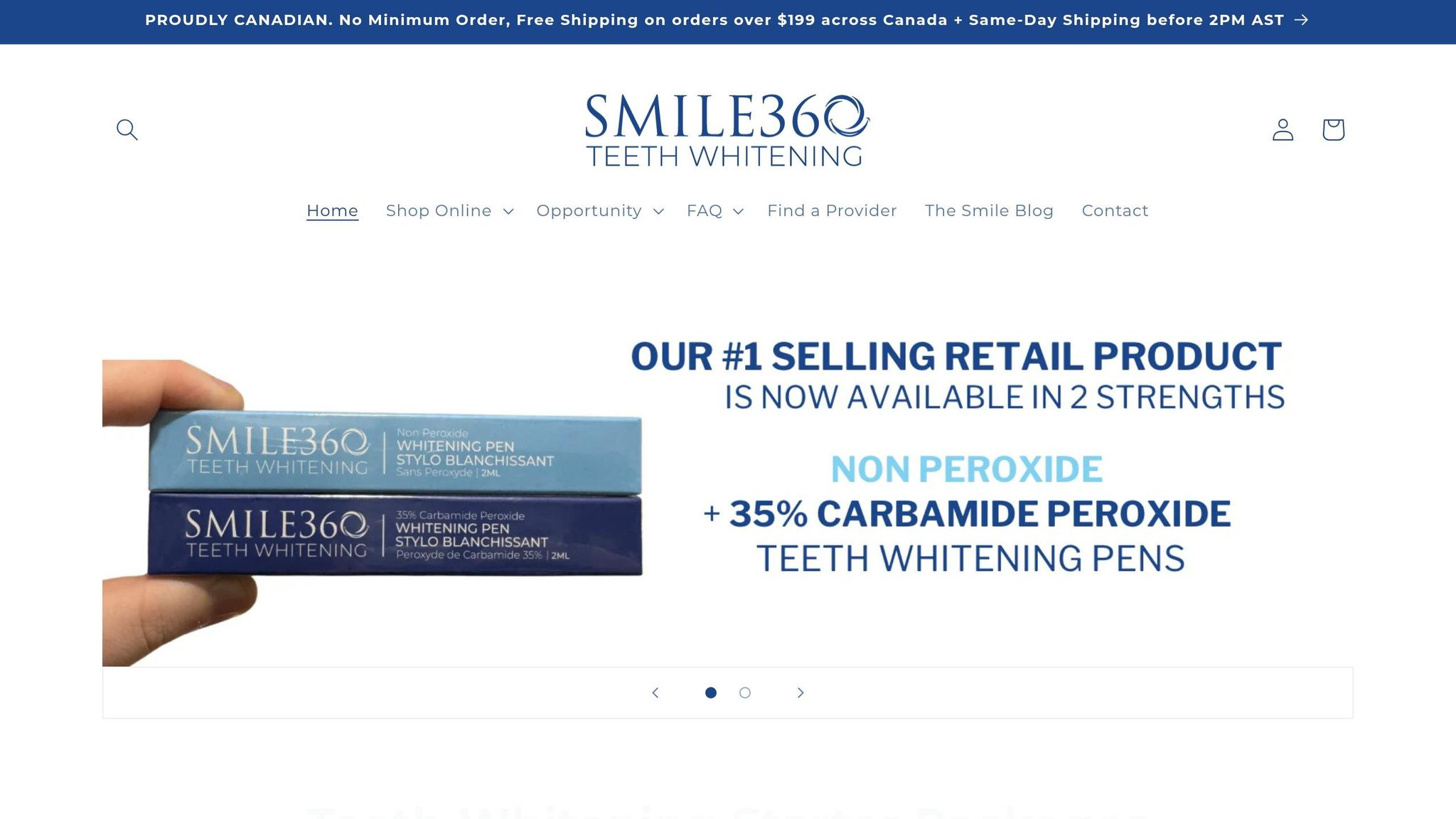
If you’re starting from scratch, Smile360 Teeth Whitening Canada provides tools to help you build a strong documentation system. Their Online Training Course ($199.99 CAD) includes a training manual and waiver templates, offering a solid starting point for client consent and intake documentation. For new practices, their starter packages bundle equipment, gels, and instructional materials, making it easier to track product batches since all supplies come from a single, traceable Canadian source.
Using Smile360’s resources can also streamline infection control logs and inventory management. Their product specifications and training materials align with Health Canada requirements, helping you maintain proper records while meeting regulatory standards.
Conclusion
Thorough client documentation plays a key role in any teeth whitening practice. It safeguards you legally, ensures client safety, and provides a clear record of results that enhances your professional credibility.
As Frontier Dental explains, "Practices that succeed focus on three pillars: evidence-based patient education, ethical, localized marketing, and a streamlined chairside experience." This highlights how detailed documentation is essential not just for safety but also for the overall success of your practice.
Accurate records also support growth. With the global teeth whitening market expected to hit US$8.2 billion by 2026, well-documented results - such as shade comparisons, session details, and follow-up notes - help establish trust. This trust can lead to stronger referrals and a more robust client base.
For those looking to build a reliable documentation system, Smile360 Teeth Whitening Canada offers practical tools and resources. Their Online Training Course ($199.99 CAD) includes waiver templates and a comprehensive training manual, while their starter packages - beginning at $1,299 CAD - feature Material Safety Data Sheets to ensure product compliance. Additionally, their Health Canada–compliant gels address regulatory requirements, simplifying product safety documentation.
FAQs
What documents do I need before whitening a client?
Before starting a whitening procedure, make sure you have the client’s medical history form and a signed teeth whitening consent form on hand. These forms can be filled out online and emailed ahead of time or printed and brought to the appointment. Both are crucial for ensuring the client’s safety and confirming their consent for the treatment.
What should I record in each whitening session note?
For every whitening session, make sure to keep a detailed record of the following:
- Date and time: Note when the session took place.
- Products used: Include specifics like the type and concentration of the whitening gel.
- Protocol followed: Outline the steps taken, including application techniques and how long the product was applied.
- Patient responses: Record their comfort level, any feedback, or issues encountered during the session.
- Pre- and post-treatment photos: If applicable, take and store images to document results.
- Procedure adjustments or special considerations: Highlight any changes made or unique factors addressed during the session.
These records help maintain thorough documentation and ensure consistent follow-up care.
How do I store records to stay PIPEDA-compliant in Canada?
To comply with PIPEDA (Personal Information Protection and Electronic Documents Act), it's essential to handle records with care and precision. Here’s how to manage records effectively while respecting privacy laws in Canada:
- Labelling and Accuracy: Clearly label records with the client’s name and date. Ensure all entries are accurate, easy to read, and either signed or initialled.
- Secure Storage: Protect records from unauthorized access by using locked filing cabinets for physical documents or encrypted digital solutions for electronic files.
- Retention Requirements: Keep records for the duration specified by legal or professional standards. When updates are needed, make corrections transparently without erasing the original information.
By following these steps, you can safeguard sensitive information, respect client privacy, and meet Canadian regulatory standards.