

Tooth Whitening Contraindications - Safety List
If a client has pain, cavities, bleeding gums, oral sores, is under 16, or may react to the gel, I would not proceed with whitening. That is the core rule.
To keep whitening safer, I would screen for four things first: oral health problems, restorations or braces, age and pregnancy, and allergy or medication risks. I would also note that whitening changes natural teeth only - not crowns, veneers, bonding, or fillings - so colour mismatch is a common issue.
Here’s the article in one quick list:
- Do not treat if there is tooth pain, decay, gum disease, swelling, bleeding, pus, ulcers, or open tissue
- Delay treatment for braces, cracked teeth, enamel wear, or cases that need a dentist first
- Use extra care with crowns, veneers, and fillings because they will not change shade
- Decline bookings for clients under 16
- Postpone or get clearance for pregnancy, breastfeeding, unclear medical history, light sensitivity, or photosensitising drugs
- Check ingredients for allergy risks, including peroxide-based products
- Document everything: screening answers, consent, shade record, gel strength, and any referral
A short intake process can prevent pain, patchy results, and record-keeping problems. In practice, I’d use the checklist to make one of four calls: proceed, postpone, modify, or refer.
| Area | What I’d look for | What I’d do |
|---|---|---|
| Oral health | Pain, cavities, bleeding, sores, swelling | Stop and refer |
| Teeth condition | Cracks, worn enamel, exposed areas | Delay and refer |
| Dental work | Crowns, veneers, bonding, fillings | Explain shade limits and get consent |
| Orthodontics | Fixed braces | Wait until removed |
| Client factors | Under 16, pregnancy, medical flags, allergies | Decline, postpone, or get clearance |
| Records | Consent, shade notes, gel details, referral notes | Keep on file |
For a service that is cosmetic, the screening step does most of the safety work.
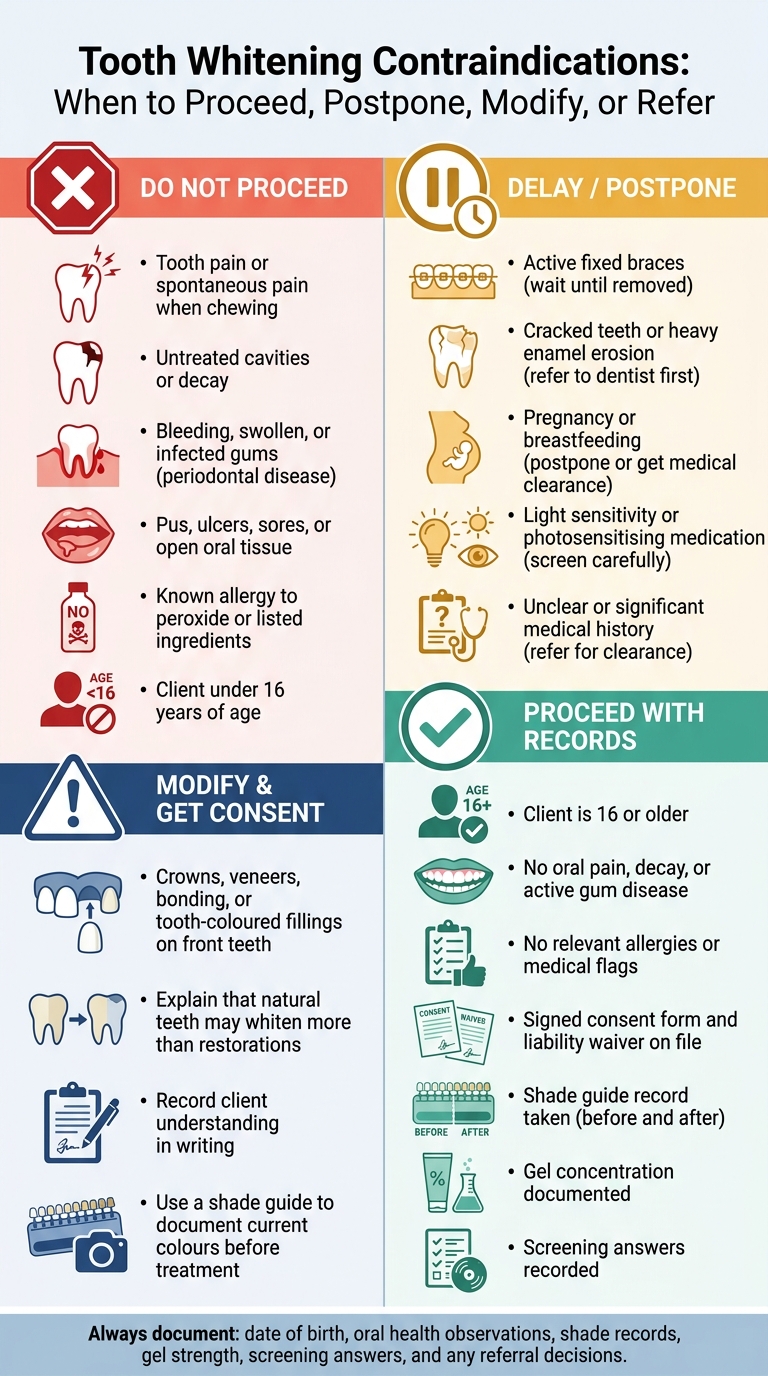
Tooth Whitening Contraindications: Proceed, Postpone, Modify or Refer
The Risks of Teeth Whitening
sbb-itb-accb75b
Do not proceed: cavities, pain, gum disease, and oral lesions
These are stop cases. If any of them are present, delay whitening and refer the client to a dentist.
Cavities, defective fillings, and exposed roots all fall into this group. Do not whiten until a dentist has treated the cause.
Start with the clearest no-go signs: decay, pain, and active tissue problems.
Untreated tooth pain and existing sensitivity
Spontaneous pain, pain when chewing, or extreme sensitivity to hot and cold are all referral triggers. A past history of sensitive teeth or gums is also a concern, especially with stronger whitening formulas such as 35% Carbamide Peroxide.
If pain is present, check the gums and soft tissue next for active inflammation or lesions.
Bleeding gums, periodontal disease, and soft tissue problems
Look for redness, swelling, soreness, bleeding, pus, ulcers, or sores. If you see any of these signs, stop and refer to a dentist.
Use the table below to match each finding with the right action.
| Finding | Red Flag | Action |
|---|---|---|
| Spontaneous pain or pain when chewing | Possible underlying dental issue | Delay treatment; refer to a dentist |
| Extreme sensitivity to hot and cold | History of sensitive teeth or gums | Delay treatment; refer to a dentist |
| Redness, swelling, soreness, bleeding, or pus | Irritated or infected tissue | Stop; refer to a dentist |
| Ulcers, sores, or open tissue | Oral lesions | Do not treat until healed and cleared |
Use caution: cracked teeth, braces, crowns, and veneers
If the client clears the stop-case screen, check these caution cases next. They don't always rule out whitening, but they can change what you do and when you do it.
Cracked, worn, or weakened enamel
Cracks, wear, erosion, or enamel defects can make teeth more sensitive. In these cases, postpone whitening and refer the client to a dentist.
Braces and active orthodontic treatment
Braces prevent even whitening under the brackets. That means the shade can turn out patchy. Delay whitening until the braces are removed.
Crowns, veneers, bonding, and tooth-coloured fillings
Front restorations call for clear expectation-setting, not an automatic no.
These materials do not whiten. So after treatment, a colour mismatch may still be there. Explain that natural teeth may lighten more than crowns, veneers, bonding, or tooth-coloured fillings. Then record the client's understanding using a written waiver agreement and use a shade guide to note current colours before you begin.
Use the table below to record the risk and next step in one line.
| Situation | Type of Contraindication | Required Action |
|---|---|---|
| Visible cracks or heavy enamel erosion | Refer first | Postpone; refer |
| Active fixed braces | Temporary - wait until removed | Delay until braces are removed |
| Crowns, veneers, bonding, or tooth-coloured fillings on front teeth | Ongoing limitation | Set expectations; obtain written consent |
General client screening: age, pregnancy, medications, and health history
After the mouth check, screen the client’s age, health history, and any product-related risks. This step helps you avoid reactions, poor results, and bookings that shouldn’t go ahead.
Minimum age and client age concerns
Do not treat clients under 16. Always verify the client’s date of birth on the intake form.
Pregnancy, breastfeeding, allergies, and medical flags
Ask directly whether the client is pregnant or breastfeeding. If they are, postpone treatment or get medical clearance before moving ahead.
Check any known allergies against the full ingredient list. This includes hydrogen peroxide, carbamide peroxide, glycerin, menthol, propylene glycol, sodium bicarbonate, carbomer, and triethanolamine.
If you use LED, ask about light sensitivity and any photosensitising medication. A client may not think this matters unless you bring it up, so be plain and direct.
If the medical history is unclear, refer the client for medical or dental clearance.
| Screening Flag | Required Action |
|---|---|
| Client under 16 years of age | Do not proceed; decline booking |
| Pregnant or breastfeeding | Postpone or obtain medical clearance |
| Known allergy to peroxide or other listed ingredients | Do not proceed; refer to dentist or physician |
| Light sensitivity or photosensitising medication | Screen carefully and refer if uncertain |
| Significant or unclear medical history | Refer for medical or dental clearance |
Record every answer before you decide whether to proceed, postpone, or refer.
How to apply the checklist in your business
Record findings, consent, and referral decisions
Once screening is done, put the outcome into writing. The treatment decision should be tied to clear notes from that visit. Record the details that support your decision, including the client’s date of birth and age (16+), oral health observations like redness, swelling, or soreness of the gums or mouth, any history of sensitivity, dental restorations such as crowns, veneers, or composite fillings, and the client’s answer to every screening question. Also record the starting and ending tooth shades with a shade guide, the gel concentration used, and any choice to postpone treatment or refer the client, along with the reason.
Keep a signed client consent form and liability waiver on file for every booking. If you decide to postpone treatment or send the client to a dentist, document that too.
Using the same form at every booking helps staff follow the same process each time. It also makes your records much easier to review if questions come up later.
Build the checklist into staff training and treatment setup
Add the screening questions and waiver wording to one standard intake form. Then train each staff member to spot red flags, use non-peroxide gel under supervision, and stop treatment right away if a client develops oral irritation - stop treatment and refer the client to a dentist.
Before you add whitening services, check with your insurer to make sure your screening and consent process fits your coverage.
A short training routine can help keep things consistent:
- Review the intake form step by step with every new staff member.
- Show staff what red flags look like in practice, not just on paper.
- Make it clear when treatment must stop and when a dental referral is needed.
Conclusion: the core safety rules
Document the result, treat only when the client passes screening, and refer whenever a red flag appears.
FAQs
Can I whiten if I have fillings or crowns?
Yes, but it helps to set the right expectations. Whitening works on natural tooth enamel. It does not change the colour of restorations like crowns, veneers, or composite fillings.
It may lift surface stains from those materials, but it won’t make them lighter than their original shade. So if your natural teeth become much whiter, your current restorations may start to look mismatched.
How long should I wait after dental treatment?
Book a professional dental cleaning 1 to 2 weeks before your teeth whitening appointment. That gives your dentist or hygienist time to clear away plaque and tartar, which helps the whitening gel reach the enamel more evenly.
If you have active decay, gum disease, or another oral health issue, hold off on whitening until it’s fully treated. A dental professional can help you figure out the best timing for your situation.
What if my teeth are already sensitive?
If you already deal with tooth sensitivity, talk to a dental professional before you start whitening. They can check your enamel and help you figure out whether whitening is a good idea right now.
If you move ahead, they may suggest a lower-concentration gel, a pH-balanced formula, or a product with added desensitizing agents to help cut down on discomfort. It also helps to deal with any underlying issues first, like cavities or gum recession, since both can make sensitivity worse.