

Ultimate Guide to Whitening Aftercare
Want to keep your teeth white after a professional treatment? The first 48 hours are crucial. Your enamel is more porous during this time, making your teeth prone to staining. Follow these steps to maintain your bright smile and protect your investment:
- Avoid dark-coloured foods and drinks like coffee, tea, red wine, and soy sauce.
- Stick to a "white diet" with light-coloured foods such as chicken, white rice, and peeled potatoes.
- Stay hydrated with plain water to rinse away debris and reduce staining risks.
- Use a soft-bristled toothbrush and non-abrasive toothpaste for sensitive teeth.
- Rinse your mouth after meals or use a straw for dark beverages to limit contact with teeth.
Teeth Whitening Aftercare Tips
sbb-itb-accb75b
The First 48-72 Hours After Whitening
The first couple of days after whitening are crucial for keeping your results intact. During this time, your enamel becomes temporarily more porous, making your teeth more vulnerable to staining.
"The key takeaway is that while the white diet isn't absolutely necessary to maintain your results, it can definitely help prevent staining right after the treatment. This is especially true during the first 48 hours when your teeth are more porous and likely to absorb colour".
Foods and Drinks to Avoid
To protect your freshly whitened teeth, steer clear of dark-coloured drinks and highly pigmented foods during the first 48–72 hours. Drinks like coffee, black tea, red wine, cola, and dark fruit juices (such as grape or cranberry) are common culprits. On the food side, avoid items like dark berries, beets, dark chocolate, and sauces like tomato-based marinara, ketchup, soy sauce, and balsamic vinegar. Spices such as curry, turmeric, and paprika can also leave stains.
Acidic foods and drinks - think citrus fruits, pickles, vinegar-based dressings, and carbonated beverages (even clear sparkling water) - should also be limited, as they can weaken your enamel. Tobacco use during this period can reduce whitening effectiveness by 35% to 40%.
Instead, opt for a "white diet" that includes foods like chicken, turkey, white fish, white rice, plain pasta, cauliflower, and peeled potatoes. If you must have a dark beverage, use a straw and rinse your mouth with water immediately afterward. Proper brushing and rinsing techniques will also help maintain your results.
Brushing and Rinsing Tips
Hold off on brushing for 30–60 minutes after eating or drinking to let your enamel settle. When brushing, use a soft-bristled toothbrush and a gentle toothpaste designed for sensitive teeth. Avoid whitening toothpastes for the first few days, as their abrasive ingredients can irritate your enamel.
Stick to lukewarm water for brushing and rinsing - extreme temperatures can heighten sensitivity. Also, avoid mouthwashes with added dyes, as the porous enamel may absorb these colours. After brushing, staying hydrated is another way to protect your teeth.
The Importance of Staying Hydrated
Drinking plain, room-temperature water right after whitening helps rehydrate your teeth, wash away debris, and stimulate saliva production, which naturally protects and strengthens enamel.
"Water helps rinse away food particles and bacteria, reducing the risk of cavities and gum disease. It also helps to neutralise acids in the mouth, which can erode tooth enamel".
For at least the first hour after your treatment, stick to plain water and avoid other beverages. After eating or drinking, rinse your mouth with water to reduce the risk of stains. During these critical 48 hours, use room-temperature or lukewarm water to avoid triggering sensitivity.
Daily Oral Hygiene After Whitening
Once you've tackled the immediate aftercare, the next step is maintaining a routine that keeps your teeth looking bright. A consistent daily routine can help preserve your whitening results for up to two years.
Choose the Best Toothpaste and Mouthwash
What you use to clean your teeth plays a big role in maintaining that radiant smile. Whitening toothpastes with baking soda are excellent for polishing surface stains without being too abrasive. If you’re dealing with sensitivity after whitening, switch to a desensitizing toothpaste with potassium nitrate - something like Sensodyne Pronamel Gentle Whitening works well. For added maintenance between professional treatments, try a peroxide-based toothpaste like Crest 3D White Brilliance Pro, which contains 4% hydrogen peroxide. This is much stronger than most over-the-counter options.
Stick to white or clear formulas for both toothpaste and mouthwash to avoid introducing new stains. When it comes to mouthwash, choose alcohol-free, antimicrobial options. Alcohol can dry out your mouth, making your enamel more prone to staining.
"If it would stain a white T-shirt, it might stain your teeth!" - Smile Point Dental
The right toothpaste and mouthwash are essential partners to good brushing and flossing habits, helping you maintain your whitening results.
Brushing and Flossing Techniques
Brush your teeth twice a day for two minutes with a soft-bristled toothbrush, and floss once daily to get rid of plaque and debris. After your whitening treatment, wait four hours before brushing. Be gentle - pressing too hard can irritate sensitive gums and may even impact your whitening results.
If brushing isn’t an option after meals, rinse your mouth with water or chew sugar-free gum to stimulate saliva, which naturally helps clean your teeth. Don’t forget to replace your toothbrush every two months to keep it effective and prevent bacteria buildup.
What to Eat and Avoid After Whitening
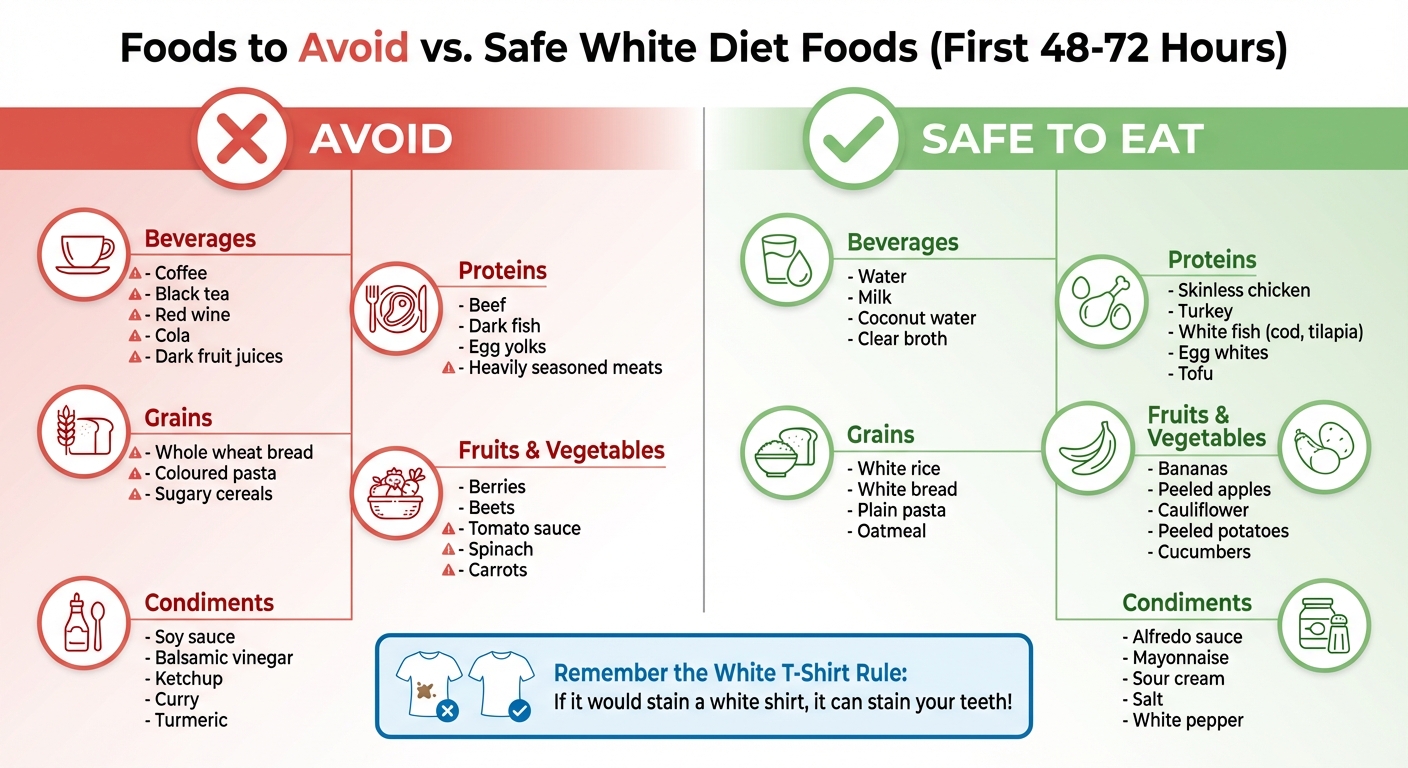
Foods to Avoid vs Safe White Diet Foods After Teeth Whitening
What you eat can make or break your whitening results. Right after whitening, your enamel becomes porous and absorbs pigments more easily. This effect lasts for 48–72 hours, after which the enamel begins to remineralize and regain its protective barrier.
To keep things simple, follow the "White T-Shirt Rule": if a food or drink would stain a white shirt, it can also stain your teeth. This means steering clear of coffee, red wine, dark sodas, berries, tomato sauce, and soy sauce during this sensitive period.
"After whitening, teeth are more vulnerable to colour absorption. Making smart food choices in the first 48 hours plays a crucial role in keeping your teeth white." - Dr. Farahnaz, Cosmetic Dentist
If you can’t give up coffee or tea, try drinking through a straw to reduce contact with your teeth. Also, rinse your mouth with water after consuming anything outside the "white diet" to help wash away pigments and neutralize acids.
Foods to Avoid and Safe Food Options
For the first 48 to 72 hours, stick to light-coloured and non-acidic foods to protect your newly whitened teeth. Here’s a quick guide to what you should avoid and what’s safe to eat:
| Category | Foods to Avoid (Staining/Acidic) | Safe "White Diet" Alternatives |
|---|---|---|
| Beverages | Coffee, black tea, red wine, cola, dark fruit juices | Water, milk, coconut water, clear broth |
| Proteins | Beef, dark fish, egg yolks, heavily seasoned meats | Skinless chicken, turkey, white fish (cod, tilapia), egg whites, tofu |
| Grains | Whole wheat bread, coloured pasta, sugary cereals | White rice, white bread, plain pasta, oatmeal |
| Fruits & Vegetables | Berries, beets, tomato sauce, spinach, carrots | Bananas, peeled apples, cauliflower, peeled potatoes, cucumbers |
| Condiments | Soy sauce, balsamic vinegar, ketchup, curry, turmeric | Alfredo sauce, mayonnaise, sour cream, salt, white pepper |
It’s also a good idea to keep foods and drinks at room temperature for the first 24 hours, as your teeth may be sensitive to hot or cold temperatures.
Foods That Strengthen Tooth Enamel
In addition to avoiding staining foods, focus on eating items that help strengthen your enamel. Calcium-rich foods like milk, plain yogurt, and white cheese, paired with phosphorus from chicken, turkey, and white fish, can support enamel repair after whitening.
Crunchy vegetables like celery, cucumbers, and cauliflower are excellent choices because they act as "natural toothbrushes". Their fibrous texture helps scrub away plaque while stimulating saliva production, which naturally cleans your mouth. Pineapple is another great option - it contains bromelain, an enzyme that may help remove surface stains. And don’t underestimate the power of water; staying hydrated encourages saliva production and helps neutralize harmful acids.
"The key takeaway is that while the white diet isn't absolutely necessary to maintain your results, it can definitely help prevent staining right after the treatment. This is especially true during the first 48 hours when your teeth are more porous and likely to absorb colour." - Dr. Zolfagharirad, Dentist, Smile Avenue Dentistry
Dealing with Sensitivity and Gum Discomfort
Once you've established good oral hygiene and a balanced diet, the next step is managing sensitivity and gum discomfort.
Tooth sensitivity after whitening treatments is incredibly common. In fact, one clinical trial revealed that professional whitening with a 35% hydrogen peroxide solution caused sensitivity in every single case studied. The main culprit is peroxide, which penetrates the enamel and reaches the dentin layer. This process can irritate the nerve centre of the tooth, leading to sharp, sudden pains - often called "zingers" - triggered by cold air or drinks.
Gum discomfort is another frequent issue, typically caused by whitening gel coming into contact with the gums, leading to a mild chemical burn. This can make your gums appear white or red and feel slightly burned. The good news? Both sensitivity and gum irritation are temporary and manageable. Sensitivity tends to peak within the first 24 hours and usually subsides within one to four days. Mild gum burns generally heal within one to three days.
"Tooth sensitivity after whitening is usually caused by irritation of your tooth's nerve (pulp) after being exposed to peroxide - a common ingredient in whitening products." - Dr. Shari L. Grigsby-Young, DDS
Products and Methods to Reduce Sensitivity
Using a desensitizing toothpaste with potassium nitrate two weeks before and after whitening can significantly help. This ingredient works by blocking pain signals in the dentinal tubules, gradually providing relief.
For professional care, a fluoride varnish containing up to 5% sodium fluoride can be applied immediately after whitening. This treatment can relieve sensitivity for up to eight weeks. If you're looking for quick at-home relief, products like Colgate Sensitivity Relief Serum can ease pain in as little as one minute when applied directly to the sensitive areas. Additionally, switching to a soft-bristled toothbrush and avoiding brushing for 30 to 60 minutes after whitening can give your enamel the chance to re-harden.
These options, whether professional or at-home, can help you manage discomfort effectively.
Simple Home Remedies for Relief
For those who prefer home remedies, there are several simple ways to ease sensitivity and gum irritation.
For gum discomfort, try a lukewarm saltwater rinse. Dissolve ½ teaspoon of salt in 240 mL of warm water, swish gently for 30 seconds, and spit out. Repeat this two to three times a day to help reduce inflammation and clean the affected area. A cold compress (ice wrapped in a thin cloth) applied to your cheek for 10–15 minutes can also numb the pain and reduce swelling.
Another option is applying food-grade aloe vera gel directly to irritated gums. Use a clean finger or a cotton swab to apply it two to three times daily. Raw honey can also be soothing due to its natural antimicrobial and anti-inflammatory properties. To avoid worsening sensitivity, stick to lukewarm foods and drinks for 24 to 48 hours post-treatment. Using a straw for cold beverages can also help.
These simple remedies, combined with professional advice, can make managing post-whitening discomfort much easier.
Keeping Results Long-Term and Touch-Up Treatments
To keep your teeth whitening results intact, proper care is key. With consistent aftercare and good hygiene, professional whitening can last up to two years. However, if you quickly return to drinking staining beverages or eating certain foods, the brightness may fade as early as three months.
When to Schedule Touch-Up Sessions
Touch-up treatments help maintain your results. For most people, scheduling touch-ups every six to 12 months works well. However, if you’re a heavy coffee drinker or smoker, you might need them more often - every four to six months.
Here’s how long different whitening methods generally last:
- In-office treatments: 12–18 months
- At-home trays: 6–12 months
- Over-the-counter kits: 3–6 months
If you’re aiming for professional-grade results, Smile360 Teeth Whitening Canada offers a solution worth considering. Their system uses a Health Canada-registered, non-peroxide gel, which can be safely applied or used in-clinic every couple of weeks until you reach your desired shade. The combination of a professional-grade non-peroxide gel and LED technology can whiten teeth by two to six shades under ideal conditions, with minimal to no sensitivity. Professional touch-ups often use stronger whitening agents and advanced techniques to tackle deeper stains, delivering more consistent and longer-lasting results.
Beyond touch-ups, maintaining daily habits is essential to prolong your bright smile.
Daily Habits to Prevent New Stains
Small changes in your daily routine can make a big difference in preserving your whitening results. For example:
- Use a straw when drinking dark liquids like coffee, tea, or soda to limit contact with your teeth.
- Rinse your mouth with water immediately after consuming staining foods or beverages to wash away pigments and acids.
- If brushing isn’t possible, chew sugar-free gum to help clear food particles.
Stick to brushing at least twice a day and flossing once daily to prevent plaque buildup, which can trap new stains. Opt for a gentle whitening toothpaste with mild polishing agents, like baking soda or low-concentration hydrogen peroxide, to remove surface stains without harming your enamel.
Avoid tobacco products, as both smoking and vaping can quickly cause yellowing or browning due to nicotine and tar. Staying hydrated also supports saliva production, which naturally cleanses your teeth and neutralizes acids. Adding crunchy fruits and vegetables - like apples, carrots, and celery - to your diet can further boost saliva production and help clean your teeth mechanically.
Conclusion
Taking care of your teeth after whitening is essential to keeping your results intact. The first 48 hours are especially important because your enamel is more porous and prone to staining during this time. Sticking to the "white shirt" rule - avoiding foods and drinks that could stain a white shirt - helps protect your smile.
Beyond those initial two days, maintaining a consistent oral care routine is key. Simple habits like drinking water after meals, using straws for dark beverages, and brushing gently can help prevent new stains. With proper care, professional whitening results can last anywhere from several months to a couple of years. Regular cleanings and occasional touch-ups will help maintain your teeth’s brightness over time.
For beauty professionals, teeth whitening can also be a lucrative addition to their services. Smile360 Teeth Whitening Canada offers a Health Canada-registered, non-peroxide gel paired with LED technology, making it a safe and effective option. Their online training platform allows you to get certified at your own pace. Typically, technicians earn $90–$100 per client, and serving just two clients daily could generate over $65,000 annually. Adding retail at-home products can increase the average ticket to over $130, with potential yearly revenue approaching $95,000.
Whether you're maintaining your personal results or expanding your professional offerings, protecting treated enamel, following an aftercare routine, and using high-quality products can make all the difference. With these strategies, a bright, confident smile is always within reach.
FAQs
Can I drink coffee if I use a straw?
Yes, sipping coffee through a straw can limit its contact with your teeth, helping to reduce the chances of staining after a whitening treatment. That said, it’s wise to hold off on drinking coffee for at least 24 to 48 hours post-treatment. This waiting period gives your enamel time to stabilise, lowering the risk of discolouration and preserving your results.
When is it safe to use whitening toothpaste again?
You can start using whitening toothpaste again 48 hours after your whitening treatment. This waiting period gives your teeth time to remineralize, which helps minimise sensitivity. In the meantime, stick to good oral hygiene habits to keep your teeth healthy and maintain your whitening results.
How do I know if sensitivity is normal or a problem?
Sensitivity following teeth whitening is typically short-lived. It often feels like a quick, sharp pain triggered by things like cold air, icy foods, or acidic drinks. However, if the discomfort lingers longer than expected or becomes more intense, it might signal a problem that needs professional attention. If you're uncertain or the sensitivity continues, it's best to check in with your dentist.