

5 Ways Educational Content Builds Customer Trust
Educational content helps customers feel informed and confident, making them more likely to trust your services. By addressing concerns, explaining processes, and managing expectations, you can establish yourself as a knowledgeable and reliable professional. Here are five ways to do this effectively:
- Demonstrate Expertise: Break down the science behind teeth whitening and explain key processes, like how peroxide-based bleaches work. Highlighting regulatory standards, such as Health Canada's pH requirements, shows your commitment to safety and professionalism.
- Address Safety Concerns: Reassure clients by discussing product safety, potential side effects, and who should avoid treatments. Transparency about safety protocols, like sterilization and emergency preparedness, builds confidence.
- Set Realistic Expectations: Be upfront about results, such as how many shades brighter teeth can get and how long the effects last. Explain factors like genetics, lifestyle habits, and the need for periodic touch-ups to maintain results.
- Clarify the Treatment Process: Walk clients through each step of the procedure, from shade assessments to post-treatment care. Explaining tools and techniques, like LED lights and whitening gels, helps ease anxiety and builds trust.
- Provide Aftercare Tips: Offer practical advice for maintaining results, such as avoiding staining foods for 48 hours and using touch-up kits. Simple guidance helps clients protect their investment and reinforces your commitment to their long-term care.
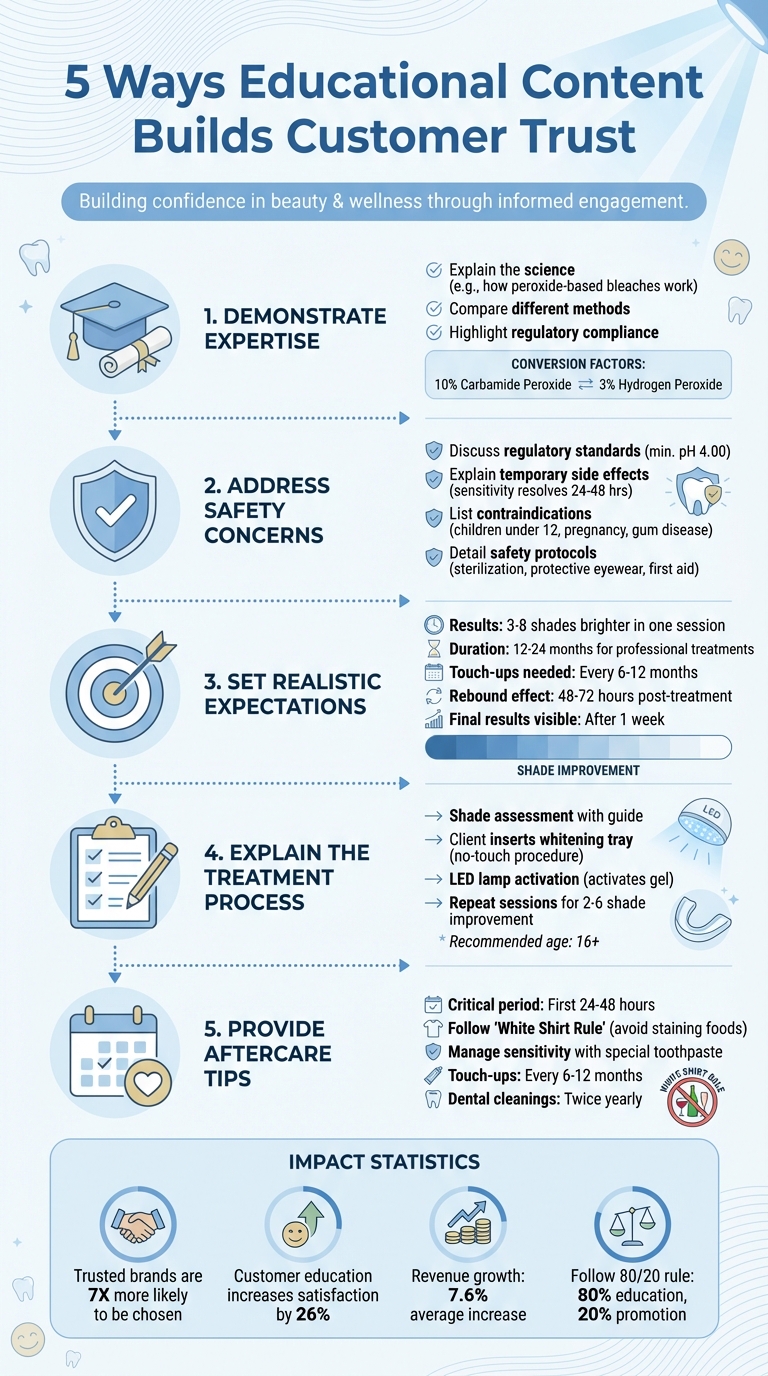
5 Ways Educational Content Builds Customer Trust in Beauty Services
1. Shows Your Expertise and Knowledge
When you break down the science behind teeth whitening, you’re not just offering a service - you’re presenting yourself as a trusted professional. For instance, explaining how peroxide-based bleaches work can go a long way in building credibility. According to Health Canada, "peroxides react and degrade chromogens thereby reducing or eliminating tooth stain". By pointing out that chromogens are the compounds responsible for tooth discolouration, you demonstrate a deep understanding of the process.
Taking it a step further, comparing different whitening methods showcases your expertise even more. For example, surface whiteners rely on abrasives to remove external stains, while peroxide-based bleaches alter the actual colour of the tooth. Additionally, clarifying that whitening agents only work on natural teeth - not on caps, crowns, veneers, or fillings - helps manage expectations and reinforces your thorough knowledge.
Highlighting regulatory guidelines also shows your dedication to safety and evidence-based practices, which reassures clients that their well-being is your priority.
"A client books an appointment with a professional hairstylist because there is trust and a level of proficiency that's expected".
This quote from Valérie Francisque, Chief Regional Sales Manager at L'Oréal Professionnel and Kérastase, perfectly illustrates why clients seek out qualified professionals - they value expertise and reliability.
Another way to demonstrate your technical knowledge is by explaining conversion factors between whitening agents. For example, 10% carbamide peroxide is roughly equivalent to 3% hydrogen peroxide. Providing this kind of detail helps clients understand the strength of the treatment and what results they can expect, further proving your preparedness and professionalism.
At Smile360 Teeth Whitening Canada, our comprehensive training ensures that professionals are equipped with both the scientific knowledge and practical skills needed to deliver safe, effective teeth whitening treatments. This commitment to expertise is what sets us apart.
sbb-itb-accb75b
2. Answers Safety Questions
Clients want assurance that their safety is a top priority. Addressing safety concerns directly shows your dedication to their well-being. A good starting point is explaining the regulatory standards your products comply with. For example, regulations require a minimum pH of 4.00 to safeguard enamel.
Being open about safety fosters trust, which is vital in building strong client relationships.
Discussing potential side effects is another way to build confidence. According to Health Canada, "current clinical studies show that home‐use tooth whitening products... are generally safe when directions of use are carefully followed". Educating clients about temporary tooth sensitivity - usually resolving within 24 to 48 hours - and offering tips like shortening treatment time or taking a 2–3 day break can help them manage any discomfort effectively.
It's equally important to highlight who should avoid whitening treatments. Health Canada advises against peroxide‐based whitening products for children under 12 years of age. By pointing out contraindications - such as pregnancy, gum disease, or untreated cavities - you show that client health takes precedence over making a sale.
Providing details about your safety protocols further strengthens client confidence. For example, using medical-grade sterilization for tools, requiring protective eyewear for both clients and technicians, and keeping first aid kits readily available demonstrates that you're prepared to handle any situation. Additionally, include clear warnings such as: "If irritation (like redness, swelling, or soreness) of the gums or mouth occurs, stop use and consult an oral health professional".
At Smile360 Teeth Whitening Canada, our Online Training Course ($199.99 CAD) ensures professionals are well-versed in safety protocols, including proper product handling and emergency procedures. This training guarantees that every treatment is performed with the utmost attention to safety.
Focusing on safety helps set clear expectations for treatment outcomes and builds trust with your clients.
3. Sets Clear Expectations for Results
Once safety concerns are addressed, the next step is to set realistic expectations. Being upfront about the likely outcomes helps establish trust. Using a professional teeth whitening kit typically brightens teeth by 3 to 8 shades in a single session. However, results can vary depending on factors like genetics, age, and the type of stains. This level of honesty helps avoid disappointment.
It’s also important to note that whitening results aren’t permanent. In-office treatments generally last 12 to 24 months, while over-the-counter strips tend to hold up for only 2 to 4 months. Dr. Amir Guorgui explains this common misconception:
"Many people believe whitening lasts forever. In reality, without touch-ups or good habits, the results can start fading within a few months".
To maintain the desired shade, clients should understand that periodic touch-ups - usually every 6 to 12 months - may be necessary. This proactive communication ensures clients are aware of the ongoing commitment.
Another key point to address is the "rebound effect." Within 48 to 72 hours after treatment, teeth may appear slightly darker as the enamel rehydrates. The final results are typically visible after about a week. Explaining this helps manage expectations and avoids the misconception that the treatment didn’t work if there’s a temporary change in brightness.
It’s also essential to clarify the limitations of whitening treatments. Whitening agents only work on natural tooth enamel. They won’t change the colour of crowns, veneers, or fillings beyond their original shade. Clients with visible dental work should be informed that achieving a uniform smile may eventually require replacing those restorations.
Lastly, lifestyle habits play a big role in how long the results last. Foods and drinks like coffee, red wine, dark berries, and tobacco can cause the whitening effects to fade more quickly. Clients should be advised to avoid pigmented foods for at least 48 hours post-treatment and use a straw for drinks that might stain. These practical tips help clients maintain their brighter smiles for longer.
4. Explains Your Treatment Process
Taking the time to walk clients through each step of a teeth whitening session removes uncertainty and helps them feel at ease. When people know what’s coming, they feel more in control, which can ease any anxiety about the process. This kind of transparency not only builds trust but also sets professionals apart from those who leave clients guessing about their treatment.
A typical whitening session follows a well-defined structure, which helps clients feel confident about the procedure. It usually starts with a shade assessment, where a technician uses a teeth shade guide to record the starting colour. In "no-touch" procedures, the client inserts a whitening tray filled with professional-grade gel under the technician's verbal guidance. A high-intensity LED lamp is then used to activate the gel. These sessions can be repeated every few weeks until the desired results are achieved, often leading to an improvement of 2 to 6 shades under ideal conditions.
Some dentists offer a hybrid approach that combines in-clinic and at-home treatments. This process begins with a clinical visit to create custom trays from moulds of the client’s teeth. The client then uses these trays at home for 14 nights with whitening gels, followed by one more week of daily one-hour "sealing" gel applications. This approach highlights a commitment to personalizing treatments to suit individual needs.
Professional teeth whitening is generally recommended for clients aged 16 and older. Julia Crump, a brand educator, emphasizes the importance of keeping clients informed:
"When customers understand how a product works, they feel in control".
Explaining details like the use of non-peroxide gels and the role of LED lights can also address concerns about pain or sensitivity. By breaking down the process and its technology, what might seem intimidating becomes clear and manageable for clients.
5. Shares Aftercare and Maintenance Tips
After explaining the whitening process, providing clear aftercare tips is key to helping clients maintain their results. Sharing this knowledge shows a commitment to long-term care and ensures clients know how to protect their bright new smiles.
The first 24 to 48 hours after treatment are especially important. During this time, teeth are more porous and prone to staining. Dr. Farahnaz, a cosmetic dentist in Vancouver, highlights this period's importance:
"After whitening, teeth are more vulnerable to colour absorption. Choosing non-staining foods in the first 48 hours is essential for maintaining whiteness".
To make it simple for clients, professionals often refer to the "White Shirt Rule": if a food or drink can stain a white shirt, it can stain freshly whitened teeth. This means avoiding items like coffee, tea, red wine, dark berries, tomato sauces, and spices like turmeric during the critical post-treatment window. Instead, suggest sticking to a "white diet" that includes foods like skinless chicken, white fish, rice, pasta with white sauce, and cauliflower.
Clients may also experience temporary sensitivity. To manage this, recommend using toothpaste designed for sensitive teeth and avoiding extremely hot or cold foods and drinks.
For maintaining long-term results, suggest scheduling dental cleanings twice a year and using at-home touch-up kits every 6–12 months. Without these steps, resuming habits that cause stains can lead to noticeable dulling within just three months.
Conclusion
Building trust with customers isn’t about flashy tactics - it’s about being a dependable source of knowledge. The five approaches discussed each serve a unique purpose: showcasing expertise fosters familiarity and reduces perceived risk, addressing safety concerns eases uncertainties that might prevent bookings, setting clear expectations safeguards relationships from disappointment, explaining your process makes complex treatments easier to understand, and offering aftercare tips establishes you as a reliable, long-term partner.
Consider this: brands that are highly trusted are seven times more likely to be chosen over those that are simply "liked". Additionally, structured customer education programs can increase satisfaction scores by over 26% and drive revenue growth by an average of 7.6%. As Juli Durante from SmartBug Media explains:
"When you educate your customers on using your solution, you're helping them find more value in your company. They trust that you're the right partner for them".
These numbers highlight the importance of investing in customer education. For beauty professionals in Canada offering teeth whitening services, Smile360 Teeth Whitening Canada provides tools to simplify this process. Their 16-page training manual and online certification course (regularly $299.99, now $199.99 CAD) cover everything from the science behind whitening to client consent templates and aftercare recommendations. These resources empower professionals to confidently explain treatments, address safety concerns, and offer ongoing support that builds strong client relationships.
Follow the 80/20 rule: dedicate 80% of your content to education and only 20% to promotion. By prioritizing teaching over selling, you’re not just building trust - you’re creating loyal clients who return, refer others, and see you as their go-to expert.
Providing clear, helpful information doesn’t just strengthen marketing efforts - it forms the backbone of enduring customer relationships in the beauty industry. Education isn’t just a strategy; it’s the key to earning trust and fostering long-term connections.
FAQs
What should I explain first to build trust fast?
To gain trust fast, highlight your expertise and clearly communicate the safety or advantages of your products or services. This shows that you’re knowledgeable and attentive, which helps build credibility and puts customers at ease.
How do I talk about whitening safety without scaring clients?
When it comes to teeth whitening, safety is a top priority. Clients should know that professional treatments adhere to strict regulations and involve thorough product testing. This ensures that only approved products are used, providing peace of mind.
Modern whitening gels are crafted with care to minimize sensitivity, making the process more comfortable for most people. And when these products are used correctly, side effects are uncommon. This is why following the guidance of a professional is so important.
By emphasizing transparency and showing a commitment to client well-being, professionals can build trust. Sharing these details not only reassures clients but also highlights the dedication to their safety at every step of the process.
What’s the best way to set expectations without underselling results?
The key to managing expectations without downplaying results lies in being transparent and informative. It's important to provide a clear explanation of what can realistically be achieved, considering factors such as genetics, age, and the severity of stains. Avoid making exaggerated claims or setting unattainable goals.
During consultations, take the time to walk clients through the process, discuss possible limitations, and explain how individual outcomes may vary. This approach not only keeps clients well-informed but also builds trust, giving them confidence in the process while ensuring they have a realistic understanding of what’s possible.