

Who Should Avoid Teeth Whitening?
If you're considering teeth whitening, it's important to know that this cosmetic treatment isn’t suitable for everyone. Whitening agents, often peroxide-based, can cause harm or discomfort under specific conditions. Here's a quick rundown of who should avoid it:
- Oral Health Issues: People with untreated cavities, gum disease, or exposed dentin are at higher risk of pain, irritation, or permanent damage.
- Dental Restorations: Crowns, veneers, and fillings don’t respond to whitening agents, leading to uneven tooth colour.
- Age Restrictions: Children under 16 should avoid whitening due to thinner enamel and developing teeth.
- Pregnancy and Breastfeeding: Whitening is not recommended during these periods due to unknown risks for the baby.
- Medical Conditions: Those with weakened immune systems or certain heart and respiratory conditions may face complications.
Ignoring these factors can lead to severe sensitivity, nerve damage, or even the need for costly dental repairs. Always consult your dentist before starting any whitening treatment to ensure it’s safe for you.
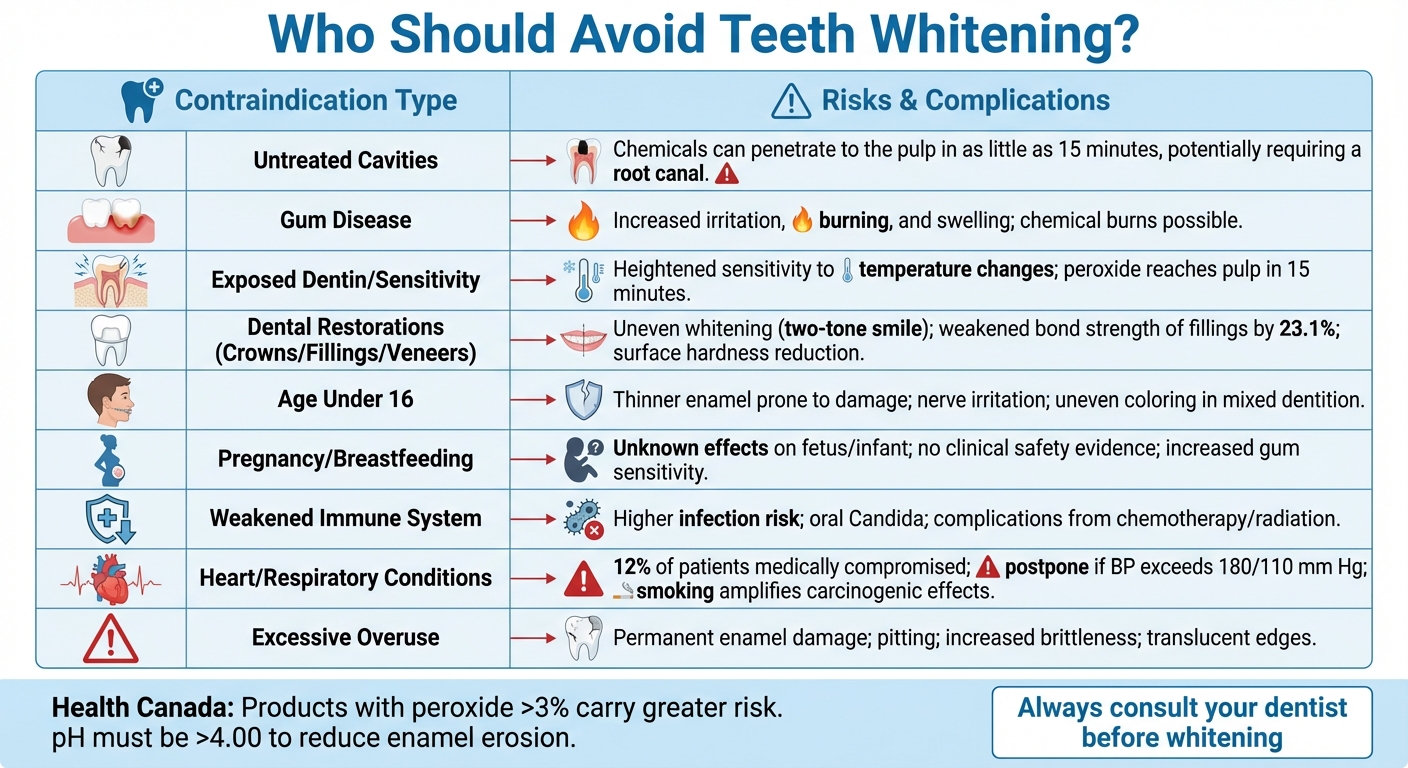
Teeth Whitening Contraindications and Associated Risks
5 Reasons You Should NOT Whiten Your Teeth
sbb-itb-accb75b
Age Restrictions
Teeth in children and younger teens are still developing, with thinner enamel that makes them more prone to damage from bleaching agents. Health Canada requires peroxide‐based tooth whitening products to include a warning stating they are not recommended for children under 12 years of age. Many dental experts suggest waiting until at least 14 to 16 years old before starting any whitening treatments. The combination of mixed dentition and delicate gum tissue in younger individuals increases the risks associated with whitening.
Children and Teens Under 16
Age-related risks underscore the importance of a professional evaluation before considering teeth whitening for younger individuals. Whitening treatments can harm developing enamel and irritate sensitive dental pulp. The thinner enamel in younger teeth makes them more susceptible to damage and heightened sensitivity. Additionally, bleaching agents may aggravate nerve tissue, leading to prolonged discomfort.
For children under 13, whitening often results in uneven colouring due to the ongoing changes in mixed dentition. Younger teens also have more sensitive gum tissue, which can become irritated or inflamed when exposed to peroxide-based gels. Dr. David Danesh from Nationwide Children's Hospital explains:
"Dental bleaching should be avoided until all the baby teeth fall out. Reasons to avoid bleaching the baby teeth is that it could hurt the adult teeth".
In exceptional cases, whitening may be considered for younger patients. For example, a tooth that darkens due to trauma or severe discolouration from conditions like fluorosis or amelogenesis imperfecta might impact a child’s mental well-being. These situations require careful supervision by a dental professional and are usually treated with specialised internal whitening methods rather than over‐the‐counter products.
For teens aged 14 to 16 who feel self-conscious about stained teeth, dentists might recommend starting with gentler options such as whitening toothpastes or mouthwashes. If at-home whitening is approved by a dentist, parents should closely monitor the process to ensure proper use and to avoid enamel damage caused by overuse or incorrect application.
Pregnancy and Breastfeeding
If you're pregnant or breastfeeding, it's best to hold off on teeth whitening until after delivery and nursing. The Canadian Dental Association advises against tooth bleaching during pregnancy since it’s a non-essential procedure, and whitening products haven’t been tested on pregnant individuals. There’s no clinical evidence confirming the safety of hydrogen peroxide or carbamide peroxide for a developing baby or a nursing infant. While the risk is likely minimal, major health organizations recommend avoiding this cosmetic treatment until breastfeeding is complete.
Pregnancy can bring its own challenges when it comes to teeth whitening. Hormonal changes can increase gum sensitivity, and nausea from morning sickness might be aggravated by the strong scent and chemical makeup of bleaching gels. Additionally, there’s a possibility of peroxide being absorbed through the mucous membranes, potentially leading to systemic exposure.
For safer options, consider using whitening toothpastes with mild abrasives or scheduling a professional dental cleaning during the second trimester (weeks 13–24). These methods can effectively tackle surface stains without posing unnecessary risks.
Since professional whitening results can last up to three years, waiting a few months won’t make a big difference. Always consult both your dentist and obstetrician before using any whitening products during pregnancy or while breastfeeding. Being informed about these risks is just as important as understanding other contraindications for whitening.
Oral Health Problems
Oral health conditions are another factor to consider when thinking about teeth whitening. Active dental issues can make whitening treatments harmful. The American Dental Association advises that any oral health problems should be fully resolved before undergoing whitening procedures. This is because peroxide-based whitening agents can irritate or worsen existing dental conditions. Let’s take a closer look at how cavities, gum disease, and sensitivity can increase these risks.
Cavities and Gum Disease
Getting a thorough dental check-up is crucial before using a personal LED teeth whitening light. Untreated cavities, for instance, can allow peroxide to penetrate deep into the tooth, potentially causing lasting damage to the pulp. Gum disease, on the other hand, can lead to chemical burns and irritation when exposed to whitening agents. If you have periodontal disease, your gums are already in a weakened state, and peroxide-based products can make the inflammation worse. Health Canada cautions that if you notice redness, swelling, or soreness in your gums during whitening treatments, you should stop immediately and consult a dentist.
Tooth Sensitivity and Exposed Dentin
If you have pre-existing sensitivity or exposed dentin, whitening treatments can exacerbate the problem. Whitening agents like hydrogen peroxide and carbamide peroxide increase the permeability of tooth enamel, allowing chemicals to reach the dentin - the yellowish layer beneath the enamel. Scientific American highlights this issue:
"Directly exposing teeth to bleaching agents, including hydrogen peroxide and carbamide peroxide, can lead to uncomfortable sensitivity in the nerve-riddled dentin".
Hydrogen peroxide can pass through enamel and dentin to reach the tooth pulp in as little as 15 minutes, potentially causing reversible pulpitis (inflammation of the pulp) and heightened sensitivity to temperature.
For individuals with thin or worn enamel, whitening can worsen the problem by further eroding the enamel. This can expose more of the yellowish dentin and even make the edges of the teeth appear translucent. Stephen Sterlitz, Chief of the Restorative Dentistry Division at the University of Kentucky, explains:
"What we end up seeing is the underlying, more yellowish dentin. And at the edges of the teeth, where there's no dentin, it looks like glass".
To ensure safe whitening, it’s essential to address cavities, gum disease, and other dental issues beforehand. Always consult your dentist to determine if whitening is a suitable option for you. Resolving these problems first is a critical step toward protecting your oral health.
Medical Conditions
Some systemic health issues can make teeth whitening riskier. While there are very few absolute reasons to avoid dental care, certain conditions may increase the chances of complications like infection, irritation, or delayed healing. That’s why a thorough health history is critical before starting any whitening treatment - it helps identify potential risks that could lead to adverse effects. In cases involving active health problems or healing disorders, professionals often recommend delaying whitening procedures. This section dives into how broader health concerns can directly affect the safety of whitening treatments.
Immune System and Healing Disorders
People with a weakened immune system face greater risks during teeth whitening. Conditions like cancer, HIV, neutropenia, or the use of immunomodulatory medications can make individuals more prone to infections, such as oral Candida. Cancer treatments, including chemotherapy and radiation, can lead to oral mucositis and xerostomia (dry mouth), which may cause pain or damage to sensitive oral tissues. Similarly, autoimmune conditions or the use of immunosuppressants increase the likelihood of infections. In these cases, professional supervision is crucial to adjust whitening agents to suit the patient’s specific health requirements.
Heart and Respiratory Conditions
Patients with heart or respiratory issues need to take extra care when considering teeth whitening. For instance, a study conducted at a large university dental clinic revealed that 12% of patients had medically compromised conditions, with hypertension being one of the most common. For those with high blood pressure, it’s advisable to postpone whitening if their readings exceed 180/110 mm Hg. Additionally, individuals with a history of infective endocarditis or certain cardiac conditions may need antibiotic prophylaxis before undergoing any procedure involving the gums.
Smoking presents another significant concern during whitening treatments. Peroxide used in whitening can amplify tobacco’s carcinogenic effects, increasing the risk of respiratory and oral cancers. Some alternative methods, like oil pulling, have also been associated with complications like lipoid pneumonia due to accidental inhalation of oils. If you have chronic medical conditions, it’s important to consult both your dentist and physician before beginning any whitening regimen to ensure your overall health can handle the chemicals involved. These considerations highlight the importance of a detailed health evaluation before opting for whitening treatments.
Dental Restorations and Damage
When it comes to teeth whitening, existing dental restorations and damage introduce a unique set of challenges. Whitening treatments interact differently with natural tooth enamel compared to artificial materials like crowns, fillings, or veneers. This difference can lead to uneven results or even harm to certain dental work. It’s another reason why a detailed dental evaluation is crucial before starting any whitening procedure.
Fillings, Crowns, and Veneers
Whitening agents simply don’t work on dental restorations. Materials like porcelain and composite resin, commonly used in crowns, veneers, and fillings, are non-porous. Unlike natural enamel, these materials cannot absorb bleaching agents, leaving them unchanged and potentially creating a mismatched, two-tone smile.
"The tooth whitening processes used to remove stains from natural teeth do not work to alter the shade or appearance of the artificial materials used to repair teeth." - Georgian Dental
Beyond the cosmetic mismatch, whitening treatments can sometimes damage restorative materials. For example, in-office bleaching with a 35% hydrogen peroxide solution has been shown to reduce the surface hardness of resin-modified glass ionomer cement restorations by 23.1%. Materials like glass ionomer and compomer are especially vulnerable, as they may develop cracks, pits, or surface erosion when exposed to bleaching agents.
Another concern is that whitening can increase the surface roughness of restorations, which encourages plaque buildup and bacterial growth. This can lead to gum irritation and even make composite fillings more prone to staining due to increased porosity.
If you’re considering whitening and have existing dental work, it’s often best to whiten your natural teeth first so any new restorations can be colour-matched. On the other hand, if you’ve already whitened your teeth and notice a mismatch, replacing the older restorations might be the better option.
Cracked Teeth or Failing Restorations
Structural damage in your teeth adds another layer of risk. Whitening agents, especially peroxide-based ones, can penetrate dental tissues. In cracked teeth, this penetration can reach the pulp or dentin, potentially causing severe sensitivity or even pulp inflammation that lingers after treatment.
Failing restorations can also create complications. If restorations have gaps or leaks, bleaching agents can seep underneath the material. Amalgam fillings, for instance, may release metal ions like mercury, copper, and silver when exposed to these chemicals, sometimes resulting in green discolouration at the edges. For composite or ceramic restorations with flaws, bleaching agents can cause internal staining or weaken the bond between the restoration and the tooth.
"Practitioners should meticulously examine the restorations before proceeding with bleaching and pay particular attention to the amalgams that have marginal discrepancies." - Jessica El-Murr, et al.
These risks highlight the importance of addressing any structural issues before whitening. A comprehensive dental check-up ensures that bleaching agents don’t infiltrate damaged areas, which could lead to permanent harm and the need for extensive repairs.
Risks of Ignoring Contraindications
When it comes to teeth whitening, overlooking contraindications isn’t just risky - it can lead to serious and lasting dental problems. Skipping over these precautions can result in severe pain, nerve damage, and irreversible changes to your enamel.
For example, if whitening agents seep into an untreated cavity, they can reach the pulp in as little as 15 minutes. This can cause intense pain and may even necessitate a root canal procedure. Similarly, bleaching diseased or inflamed gums can exacerbate irritation and lead to significant discomfort.
"Often, the peroxide is misapplied and causes a significant sensitivity of the teeth and gums. Should there be a problem, a hairdresser or a beautician can't do much because they ignore what happens their client's mouth."
– Dr. Annie St-Georges, Professor, University of Montreal Faculty of Dentistry
The risks don’t stop at immediate pain. Ignoring contraindications or overusing whitening products can cause permanent enamel damage, leaving teeth more porous and prone to pitting. This can make your teeth appear translucent at the edges, making them more susceptible to restaining and decay. If you have dental restorations like crowns, veneers, or fillings, keep in mind that these materials don’t respond to whitening agents. This mismatch can result in a two-tone smile. Worse, the bond strength of composite fillings can drop by as much as 23.1%, increasing the likelihood of restoration failure.
Complications by Contraindication Type
Here’s a breakdown of potential risks based on specific contraindications:
| Contraindication Type | Risks & Complications |
|---|---|
| Untreated Cavities | Chemicals can penetrate to the pulp, potentially requiring a root canal |
| Gum Disease | Increased irritation, burning, and swelling |
| Exposed Dentin | Heightened sensitivity to temperature changes |
| Dental Restorations | Uneven whitening; weakened bond strength of fillings |
| Pregnancy | Unknown effects on the foetus; whitening should be avoided |
| Excessive Overuse | Pitting, permanent enamel damage, and increased brittleness |
Health Canada has established guidelines to help mitigate these risks. Whitening products must maintain a pH above 4.00 to reduce enamel erosion, and those with peroxide levels exceeding 3% carry a greater risk of side effects like tooth sensitivity and gum irritation. If you notice redness, swelling, or persistent discomfort, stop using the product immediately and consult your dentist.
These potential complications highlight the importance of a thorough dental evaluation before starting any whitening treatment.
Conclusion
Teeth whitening can deliver noticeable results, but it’s not suitable for everyone. If you have untreated cavities, gum disease, worn enamel, or dental restorations like crowns and fillings, whitening treatments might worsen these conditions. Additionally, children under 16, pregnant or breastfeeding women, and individuals with intrinsic discolouration caused by trauma or medications should consider delaying the procedure.
The Canadian Dental Association advises, "Bleaching should be done only under a dentist's care." A professional evaluation can help pinpoint the cause of discolouration and address any underlying dental issues before starting a whitening treatment. This step is especially important because some types of intrinsic stains may require alternative solutions.
"Seeing a dentist before whitening is more than a safety measure - it's also the best way to ensure success."
– Jagare Ridge Dental
If you have cavities or gum disease, tackle those issues first. For those with dental restorations on front teeth, it’s essential to consult your dentist, as whitening agents don’t affect synthetic materials. This could leave you with an uneven smile, as the natural teeth lighten while restorations stay the same shade.
Should you experience redness, swelling, or discomfort during whitening, stop immediately and consult your dentist. Taking these precautions ensures you can brighten your smile while keeping your dental health intact.
FAQs
How do I know if my teeth are safe to whiten?
Before considering teeth whitening, it's important to consult a dental professional. They can evaluate your oral health, checking for concerns like cavities, gum disease, or worn enamel that could make whitening unsafe. If you have sensitive teeth, whitening may not be ideal either. A professional assessment ensures your teeth are in good shape and helps determine the safest and most effective treatment options tailored to you.
Can I whiten my teeth if I have fillings, crowns, or veneers?
Teeth whitening treatments are not effective on dental restorations, such as fillings, crowns, or veneers. These materials are designed to maintain their original shade and do not react to whitening agents, meaning they will stay the same colour even after the whitening process.
What can I do instead of whitening if I’m pregnant or breastfeeding?
If you're pregnant or breastfeeding, it's wise to steer clear of teeth whitening treatments that involve bleaching agents. The reason? There simply isn't enough research to confirm their safety during this period. Instead, stick to maintaining excellent oral hygiene - brush and floss daily, schedule regular dental cleanings, and explore options like whitening toothpaste or other non-chemical approaches. For the best guidance, consult your dentist, who can provide advice suited to your specific situation.